
AI Powered Smart Home Automation
How AI powered smart home automation uses real household patterns to unify lighting, climate, security, and entertainment into a home that simply works.
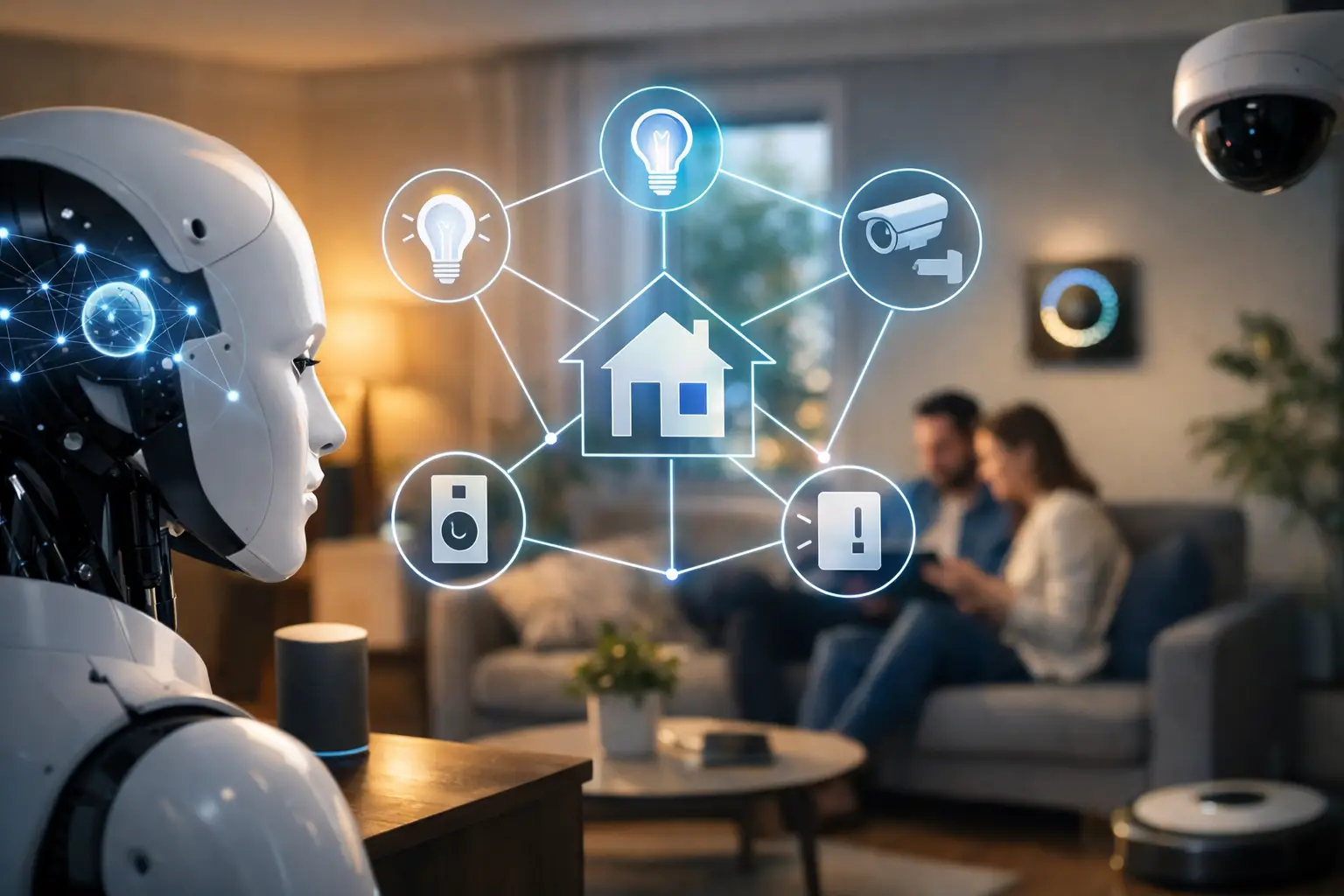
A smart home stops feeling smart the moment you need five apps to dim the lights, adjust the thermostat, arm the alarm, and start movie night. That is exactly where ai powered smart home automation changes the equation. Instead of asking homeowners to build every routine from scratch, it uses real household patterns to make the home more responsive, more unified, and far less dependent on constant manual control.
For premium homes, that shift matters. The real value is not novelty. It is fewer taps, fewer workarounds, fewer service calls, and a home that behaves more like a well-managed system than a pile of gadgets.
What ai powered smart home automation actually does
Basic automation follows fixed rules. If the time is 7:00 PM, turn on the porch light. If motion is detected, turn on the hallway light. Those rules are useful, but they are only as good as the person programming them.
AI adds a layer of interpretation. It can observe when the home is usually occupied, how lighting scenes change through the evening, which rooms are active at certain times, and how climate preferences shift on weekdays versus weekends. From there, it can suggest routines, optimize timing, and reduce the setup burden that makes many smart homes feel unfinished.
That does not mean the home should become unpredictable. Good AI in the home should not override personal preferences or make decisions you cannot understand. The best systems use AI to assist and refine, not to take control away from the homeowner. That distinction is critical.
Why most smart homes still feel fragmented
The market is full of connected products, but connection is not the same as coordination. A home can have smart shades, smart lighting, distributed audio, cameras, thermostats, and voice assistants, yet still feel clumsy because every category lives in its own app and follows its own logic.
That fragmentation creates three common problems. First, daily use becomes inconsistent. Second, troubleshooting becomes harder because no one system has a complete view of the home. Third, future upgrades get more expensive because every addition has to work around old platform decisions.
This is where AI is most valuable when paired with a unified platform. If the system only sees one brand or one room, it can only optimize a narrow slice of the experience. If it can coordinate lighting, shades, climate, security, and entertainment from one place, the results start to feel intentional.
The difference between gimmicks and real intelligence
Not every AI label means much. Some products call simple presets or voice control “AI” because the term sells. Real intelligence in home automation should produce practical outcomes that the homeowner actually notices.
A useful system can recognize that the downstairs lights are always dimmed after 9:30 PM, that shades in west-facing rooms need different timing in summer, or that the house should shift into an energy-saving state when everyone leaves for school and work. It can then draft those automations instead of forcing the homeowner or installer to build everything line by line.
The trade-off is that AI needs context. If your system is limited, locked to a single brand, or split across disconnected ecosystems, the AI only sees fragments. Better inputs lead to better automation. That is why open compatibility matters as much as the intelligence itself.
Where ai powered smart home automation delivers the most value
Lighting is usually the first place homeowners notice the benefit. Instead of manually creating dozens of scenes, AI can identify patterns and recommend routines for mornings, entertaining, bedtime, and away modes. The result is not just convenience. It is consistency across the home.
Climate is another high-impact category. Fixed schedules are fine until life changes. AI-assisted control can respond to actual occupancy patterns, time of day, and household behavior in ways that feel more natural than rigid programming. Done well, this improves comfort and can reduce energy waste without making the house feel restrictive.
Security and presence also improve when systems work together. A home that understands occupancy can handle lock states, exterior lighting, cameras, and notifications with more context. That matters because a smart home should reduce noise, not create more alerts.
Entertainment is often overlooked, but it is one of the clearest examples of friction in daily life. When audio, TVs, lighting, and shades can respond together, simple moments feel elevated without becoming complicated. That is the point of premium automation.
Open systems make AI more useful
Closed systems promise simplicity, but they often create a different problem: long-term dependence. If your home relies on a proprietary ecosystem with limited compatibility, every future device decision becomes narrower. If support requires a dealer visit for every change, the smart home starts working against the homeowner.
An open, professionally managed platform gives AI more room to be genuinely helpful. It can pull from more devices, unify more subsystems, and evolve over time instead of aging into a dead end. That flexibility matters in custom homes, renovations, and migrations where existing devices from multiple brands are already in place.
This is one reason many homeowners are rethinking legacy luxury automation models. They want premium results, but they also want hardware choice, stronger privacy, and a lower total cost of ownership. Those priorities are no longer niche. They are quickly becoming baseline expectations.
Privacy is not optional
A home automation system sees a lot. Occupancy patterns, schedules, device usage, lock states, camera events, and climate behavior can reveal more than most homeowners realize. So when AI enters the equation, privacy architecture matters just as much as convenience.
The right question is not whether AI is powerful. It is where the data goes, who controls it, and how much of the home depends on cloud services to function. Homeowners investing in premium automation should expect transparency, local resilience, and a design that does not trade privacy for features.
This is especially important for families and for anyone building a long-term smart home foundation. Convenience is easy to sell. Trust is harder to earn.
For installers, AI should reduce friction, not create it
Professional installers have a different stake in this conversation. They need systems that deploy cleanly, stay stable, and remain manageable after handoff. AI is valuable if it shortens programming time, helps surface useful automations, and makes ongoing optimization easier. It is not valuable if it introduces uncertainty or increases support overhead.
That is why production-ready infrastructure matters. AI needs to sit on top of a dependable control layer with broad device support, clear documentation, and remote management capabilities . Otherwise, every project becomes a custom workaround.
For both homeowners and integrators, the strongest model is not DIY chaos and not dealer lock-in. It is professional smart home management with open-system flexibility. That is the space where platforms like Selora Homes are changing expectations.
How to evaluate an AI-powered platform for your home
Start with compatibility, not marketing. Ask whether the platform can unify the devices and brands already in the home, and whether it can grow with future additions. Then look at how the AI behaves. Does it generate useful automation suggestions, or does it just layer a chatbot on top of disconnected controls?
Next, look at management. Can updates, support, and troubleshooting happen without turning every adjustment into a site visit? Remote access and centralized administration are not just convenience features. They are part of what makes a premium smart home sustainable.
Finally, look at ownership. A smart home should become more valuable over time, not more fragile. If your system depends on a closed ecosystem, limited hardware choices, or expensive migration paths later, the upfront elegance may not be worth the long-term constraint.
The best ai powered smart home automation does not ask you to change how you live. It learns the rhythm of the home, brings disconnected systems into one experience, and gives you more control without more effort. That is where smart homes stop performing like tech demos and start delivering what people actually wanted all along: a home that simply works.