
The Best Crestron Alternative for Modern Homes
Looking for a Crestron alternative? See what a strong replacement needs: broad device compatibility, less dealer lock-in, privacy, and lower cost over time.
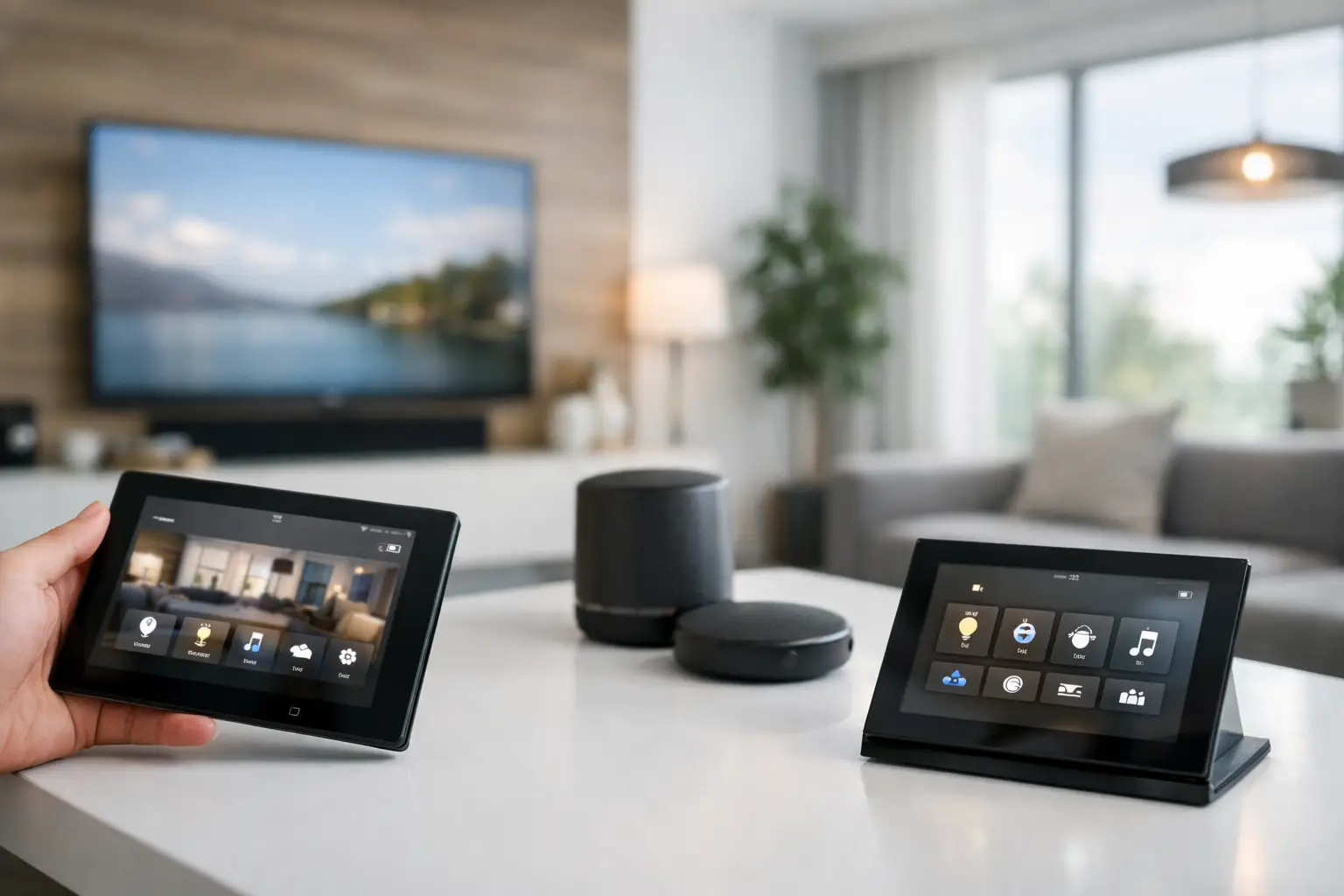
A lot of homeowners do not start out looking for a crestron alternative. They start with a simpler problem: too many apps, too many remotes, too many systems that almost work together. Then the project gets bigger. A renovation adds lighting control. The media room needs better integration. Climate, shades, security, and music all need to behave like one home, not six separate products.
That is usually the moment the market points you toward traditional luxury automation. Crestron has long been part of that conversation, and for good reason. It is powerful, deeply customizable, and widely recognized in high-end residential projects. But power alone is not the same as fit. For many modern homes, the better question is not whether Crestron is capable. It is whether a closed, dealer-dependent platform still makes sense when homeowners want more flexibility, better visibility, and fewer long-term constraints.
What makes a good crestron alternative?
A serious crestron alternative needs to do more than imitate a touchscreen or offer a slick app. It has to solve the structural issues that frustrate homeowners and installers over time.
First, it needs broad compatibility. Most homes are not built from a single brand anymore. They include Lutron lighting, Sonos audio, smart locks, cameras, thermostats, voice assistants, and often a mix of legacy and newer devices. A platform that forces brand purity creates friction from day one and replacement costs later.
Second, it needs a better ownership model. Traditional luxury automation often depends on a certified dealer for every change, every update, and every troubleshooting session. That can work well for some estates and commercial environments, but it can also turn routine adjustments into expensive service calls. Homeowners increasingly expect a premium experience without permanent dependency.
Third, it needs to be future-proof in a practical sense. That means software updates that keep coming, support for new protocols and devices, and an architecture that does not punish you for wanting to evolve the home over time.
Where Crestron still wins, and where it does not
Crestron earned its reputation by handling complex automation with a high degree of control. In large custom homes with extensive AV distribution, dedicated theaters, and highly tailored programming requirements, it remains a credible option. Installers who know the platform well can build polished systems with impressive performance.
The trade-off is that Crestron often asks the homeowner to accept a more closed relationship with their own house. Hardware choices can narrow. Changes can require specialized support. Integrations may be technically possible but still cumbersome in practice. If your goal is absolute customization through a traditional integrator model, that may be acceptable. If your goal is premium smart home control with more freedom, it may not be.
This is where many buyers start rethinking the category. They are not looking for less sophistication. They are looking for a smarter operating model.
The shift toward open smart home platforms
The strongest alternative to Crestron is not a cheaper copy of Crestron. It is an open, professionally managed platform that combines luxury-home reliability with modern interoperability.
That shift matters because the smart home market has changed. Homeowners now expect their automation system to work across brands, adapt over time, and support privacy choices that are actually visible to them. They also expect remote support, managed updates, and mobile control that feels current rather than bolted on.
Open platforms have another advantage: they reduce the risk of expensive rip-and-replace cycles. If you want to keep your lighting system but change your voice assistant, or add energy management later, the platform should make that easier, not turn it into a redesign.
Why homeowners are choosing a crestron alternative
The biggest reason is control, not just control of devices, but control of the overall experience.
Homeowners want one place to manage lighting, shades, climate, entertainment, security, and routines. They want their home to respond intelligently without requiring custom code for every small behavior. They want support when they need it, but they do not want to be trapped in a system that only a specific dealer can touch.
Cost is part of the decision too, though not always in the way people assume. Crestron is rarely evaluated on upfront hardware alone. The real issue is total cost over time. Programming, service calls, system modifications, and proprietary upgrade paths can add up quickly. A platform that supports more devices, enables remote management, and reduces custom rework often delivers better value even if the installation itself is still professional and premium.
Privacy is another factor that gets more attention now than it did a few years ago. Families are more aware of where their data lives, how remote access works, and whether cloud dependency is quietly shaping their home experience. A strong alternative should offer modern convenience without treating privacy as an afterthought.
What to look for instead of dealer lock-in
If you are comparing platforms, pay attention to how the system behaves after installation. Sales demos are easy. Long-term ownership is where the real difference shows up.
A better platform should let you unify a mixed-device home rather than forcing every subsystem into one manufacturer stack. It should support remote diagnostics and managed updates so problems can be fixed faster. It should also make room for intelligent automation that is practical, not theatrical. Good automation means the lights, climate, security, and media work together in ways that save time and reduce friction every day.
For installers, the standard is just as clear. They need a platform that is stable in the field, documented well, and flexible enough to serve both custom homes and production projects. A system that only works through deep proprietary specialization may protect a business model, but it can also slow growth and limit what clients can keep from previous installations.
The best crestron alternative is not one-size-fits-all
There is no single answer for every project. If you are building an ultra-custom estate with highly specialized AV demands and a client who expects ongoing integrator involvement for every detail, Crestron may still be appropriate.
But that is not most projects.
Many homeowners want a platform that feels high-end without being closed. They want elegant control, broad device support, and the ability to grow the system over time. They want their installer to stay valuable, not become a gatekeeper. For those homes, an open platform with professional management is often the better fit.
That is exactly why more buyers are evaluating solutions like Selora Homes. The appeal is not just broader compatibility or lower total cost, though both matter. It is the combination of open-system flexibility, managed software, remote support, AI-assisted automation, and a polished homeowner experience that does not depend on proprietary lock-in to feel premium.
How to evaluate your options before you commit
Start with the home you actually have, not the brochure version of the home. List the systems you already own or plan to install: lighting, audio, shades, HVAC, cameras, locks, sensors, and voice assistants. Then ask a harder question: which platform lets those systems work together without forcing unnecessary replacement?
Next, examine serviceability. Who can update the system? How are changes made? Can issues be diagnosed remotely? Will simple adjustments require scheduling a technician every time? A luxury system should reduce operational friction, not institutionalize it.
Then look at expansion. If you add a guest house, home office, solar integration, or advanced energy controls later, can the platform support that direction? Future-proofing is not about promising everything. It is about avoiding dead ends.
Finally, ask how the system handles intelligence. Rules-based automation still matters, but the best modern platforms go further. They help identify patterns, simplify setup, and make the home easier to manage as routines change. That is where smart home control starts to feel less like programming and more like living.
A premium home should not feel like a stack of expensive compromises. If you are considering a crestron alternative, the real opportunity is bigger than switching brands. It is choosing a platform that gives you lasting control over your home, your devices, and what comes next.