
How to Build a Future Proof Smart Home System
A future proof smart home system changes without a full replacement. Here is how open compatibility, local resilience, managed software, and unified control keep a home current for years.
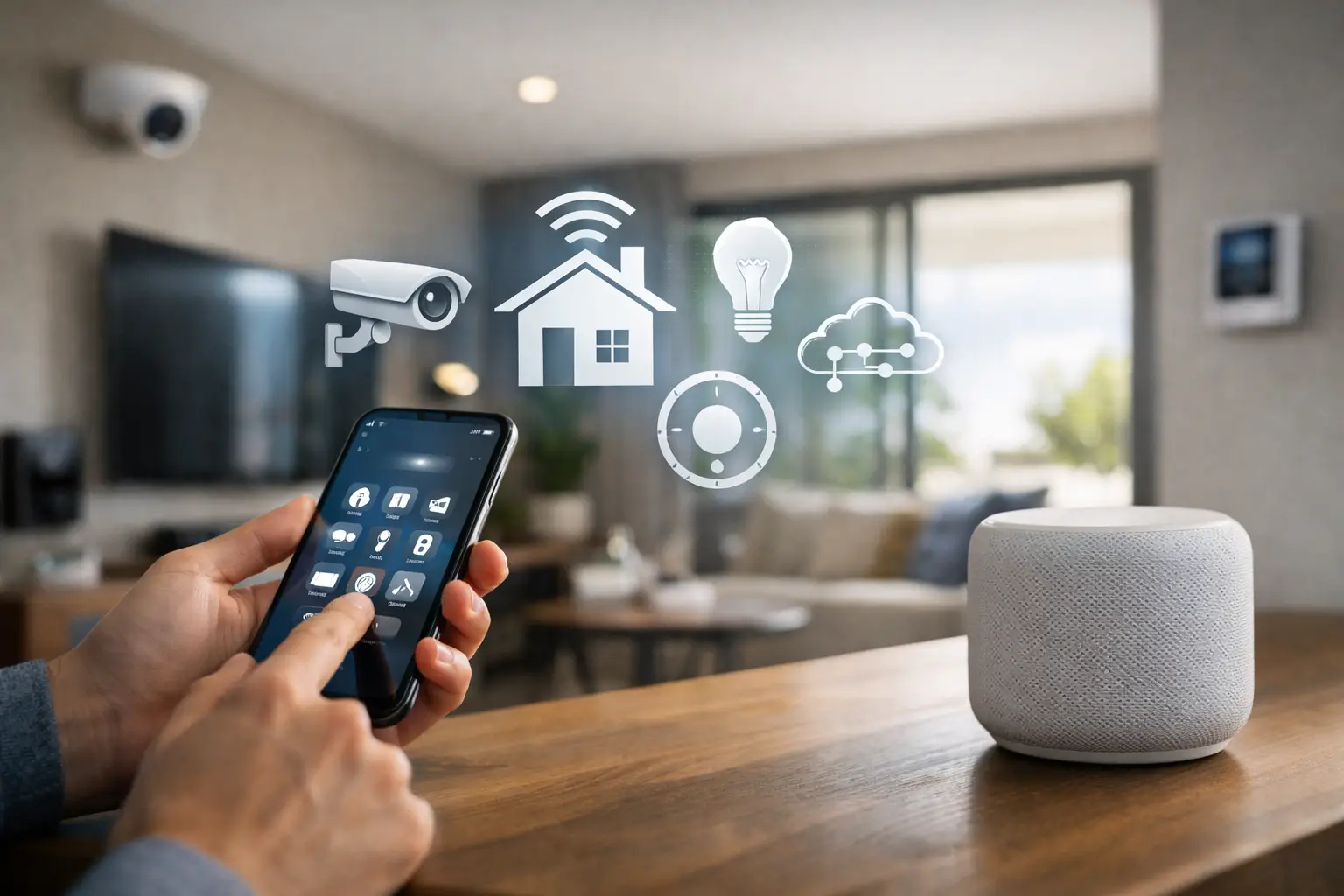
A smart home rarely fails all at once. It starts with small annoyances: one app for lights, another for cameras, a voice assistant that controls half the house, and a dealer-only system that suddenly feels expensive every time you want a simple change. That is usually the moment homeowners start asking a better question, not which gadget to buy next, but how to build a future proof smart home system that still makes sense five or ten years from now.
The right answer is not a bigger pile of devices. It is a better foundation.
What a future proof smart home system actually means
A future proof smart home system is not a promise that technology will stop changing. It means your home can change without forcing a full replacement. New devices should be easy to add. Old devices should not become useless because one brand changed direction. Your automations should keep working even if you swap a thermostat, change internet providers, or decide you want motorized shades two years after a renovation ends.
That is the difference between a smart home that ages well and one that becomes a maintenance project.
Future-proofing comes down to four practical ideas: open compatibility, local resilience, managed software, and flexible control. If one of those is missing, the system may work well today and still disappoint later.
Start with architecture, not products
Most smart home mistakes happen at the shopping stage. People compare cameras, dimmers, locks, and speakers before they decide how the whole system should operate. That approach almost guarantees fragmentation.
A stronger approach is to define the architecture first. Ask what should happen when the internet goes down. Ask whether you want one app or several. Ask whether the system can support lighting, climate, security, audio, shades, and energy without becoming brand-dependent. Ask who can support it remotely, and whether every change requires a truck roll or service call.
Those questions lead to a better buying decision than any spec sheet.
For higher-end homes, renovations, and custom builds, architecture matters even more. You are not just buying convenience. You are making choices that affect wiring, labor, service costs, and long-term property value.
Closed systems feel simple until they become limiting
Proprietary platforms often look attractive early on because they offer a polished experience and a single vendor relationship. The trade-off shows up later. Hardware choices narrow. Upgrades become expensive. Integrations depend on what the platform owner approves. In many cases, homeowners cannot make even minor adjustments without going back through a dealer.
That model can work for some households, but it is not future-proof in any meaningful sense. It shifts control away from the homeowner and places too much of the home’s long-term usability in someone else’s hands.
Open does not have to mean complicated
Some homeowners hear “open system” and picture endless tinkering. That concern is reasonable, especially if they want a polished result, not a hobby. But open architecture and professional management are not opposites.
A properly designed open platform gives you broad device compatibility and more freedom to evolve, while managed software, remote support , and pre-configuration remove the burden of doing it yourself. That combination is where the market is moving because it solves the real problem: people want flexibility without chaos.
The core features of a future proof smart home system
If you are evaluating platforms or planning a new project, these are the features that matter most.
Broad device compatibility
A future proof smart home system should work across major ecosystems and protocols, not force you into one brand’s product catalog. Lighting, shades, thermostats, cameras, locks, sensors, speakers, and garage doors rarely all come from the same manufacturer. They should not have to.
Compatibility matters for practical reasons. Maybe you already own Sonos, Lutron, Apple devices, or Z-Wave sensors. Maybe your builder prefers one lighting platform while your AV contractor prefers another. A flexible system lets those choices coexist under one layer of control.
The bigger point is longevity. The more brands and standards a platform supports, the less likely you are to hit a dead end later.
Local control with cloud benefits where they help
A smart home that stops functioning when the internet stumbles is not smart. Core automations should continue locally whenever possible. Lights should still respond. Climate routines should still run. Security logic should not vanish because your ISP had a bad afternoon.
At the same time, cloud services can still be useful for remote access, notifications, managed backups, and software updates. The best systems use both thoughtfully. They do not depend entirely on the cloud, and they do not ignore the convenience cloud services can provide.
Managed updates and long-term software support
Software is where many smart homes quietly fall behind. Devices keep working, but the system becomes harder to maintain, less secure, and more brittle with every skipped update.
A future-proof platform needs a clear update strategy. That means managed patches, compatibility maintenance, and a plan for keeping the system current without turning every update into a risk event. Homeowners should not have to choose between stability and progress.
This is one of the most underrated differences between consumer gadget stacks and professionally managed smart home platforms.
Flexible automation that can grow with the household
The automation you want on move-in day is rarely the automation you want three years later. Families add routines, children grow older, schedules shift, rooms change use, and energy priorities evolve.
That is why rigid automation templates age badly. A better system supports simple scenes and advanced logic, with room to refine over time. Maybe you begin with occupancy-based lighting and bedtime scenes. Later you add whole-home shutdown routines, shade schedules based on sun position, energy load management, or presence-aware climate control.
The system should support that progression without requiring a full redesign.
Why unified control matters more than more devices
Plenty of homes are already “smart” by device count. What they lack is coherence.
Unified control matters because the smart home experience is cumulative. If lighting feels separate from shades, security, and audio, the home never really behaves like one system. It behaves like a collection of branded islands.
That is where homeowners feel the daily friction. Too many apps. Too many interfaces. Too many exceptions. One room works one way, another room works differently, and nobody in the house wants to remember the logic.
A future proof smart home system should create one control layer across the home, so devices from different brands act like part of a single environment. That does more than simplify the user experience. It also makes future upgrades cleaner because you are replacing components inside a unified system, not rebuilding the experience from scratch.
Privacy and ownership are part of future-proofing
Future-proofing is not only about compatibility. It is also about control over your data and your home logic.
If every action in the house depends on third-party cloud processing, you are exposed to policy changes, subscription shifts, and service retirements you cannot control. Privacy-first architecture reduces that risk. It keeps more of your home’s intelligence close to home and limits unnecessary data sharing.
For affluent homeowners and families, that is not a niche concern. It is part of buying well. A premium home should not come with hidden compromises around data visibility or operational control.
The migration question: what if you already have a mixed system?
Many homeowners do not start with a blank slate. They already have a patchwork of smart devices, partial automations, and a few systems they regret buying.
The good news is that a future proof smart home system does not require throwing everything away. In many cases, the smarter move is to audit what you have, keep the hardware that still adds value, and unify it under a stronger platform. Existing lighting, audio, voice control, security devices, and sensors can often be brought into a single managed environment.
That approach lowers cost, reduces waste, and speeds up the path to a better experience. It also helps homeowners avoid the frustration of replacing premium hardware just because the original system was poorly integrated.
This is where a professionally managed platform stands apart. It can bridge the gap between what is already installed and what the home needs next.
A smarter standard for homeowners and installers
For homeowners, future-proofing means freedom. Freedom to choose better hardware over time. Freedom to expand without starting over. Freedom from dealer lock-in and app sprawl.
For installers and integrators, it means a platform that is easier to deploy, support, and evolve across different projects. A system with broad compatibility, remote management, and predictable software maintenance is not just better for the client. It is better for the service model.
That is why open, professionally managed platforms are gaining ground against traditional luxury automation stacks. They align better with how people actually live and how technology actually changes.
Selora Homes is built around that reality: open-system flexibility, managed reliability, AI-assisted automation, and a single control experience that can grow with the home instead of boxing it in.
A smart home should not be impressive only at handoff. The real test is whether it still feels current, controllable, and easy to live with years later. Build for that standard, and the technology will keep serving the home instead of the other way around.