
Privacy First Smart Home, Done Right
A privacy first smart home keeps automation, control, and household data local by default. Here is how to get premium convenience without handing your life to the cloud.
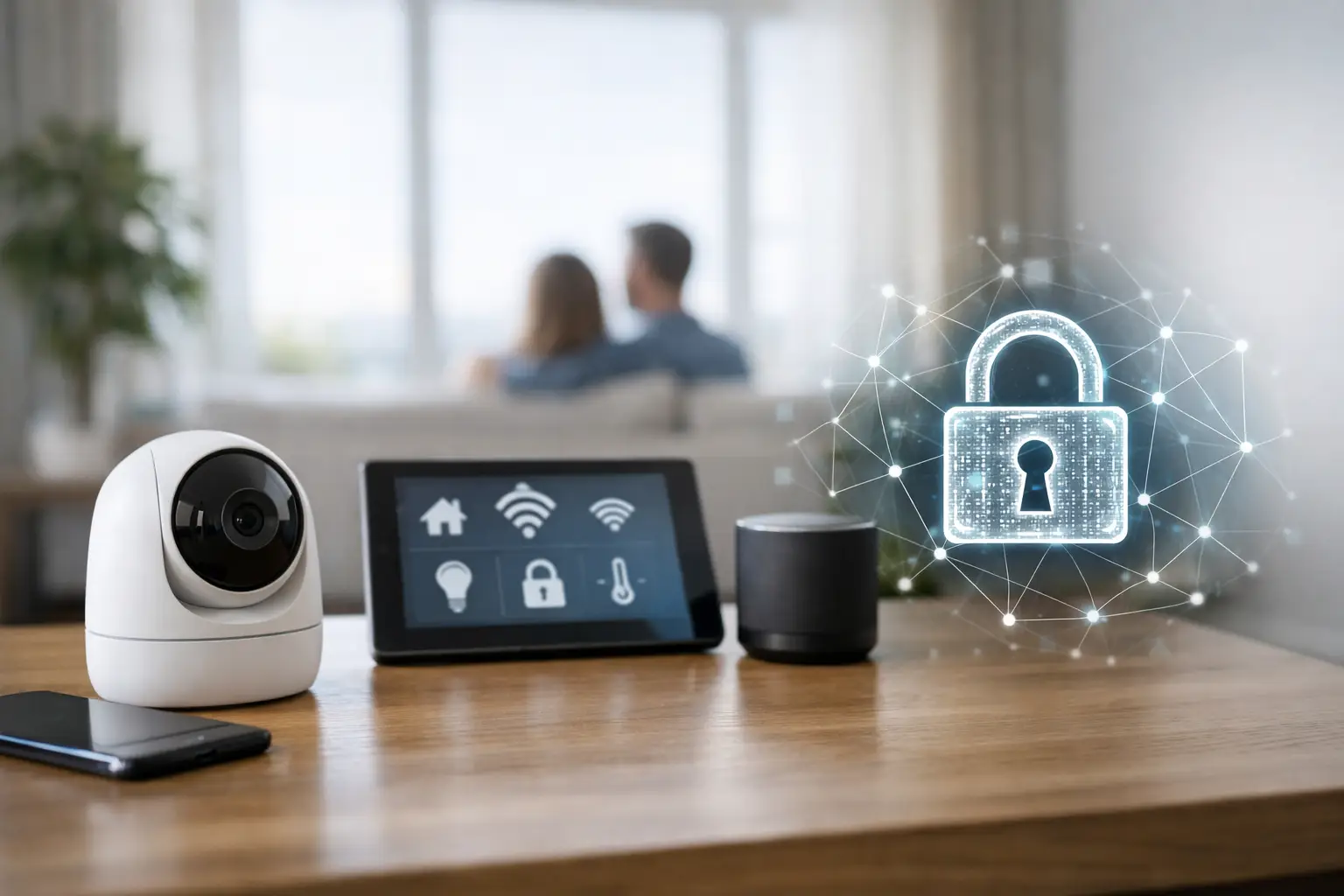
The moment a smart home starts sending every light tap, door event, and voice command to someone else’s cloud, convenience comes with a hidden cost. A privacy first smart home takes a different path. It treats your home like a private environment, not a data collection point, while still delivering the comfort, automation, and control people expect from a premium connected home.
That distinction matters more than ever in larger homes and mixed-device environments. Many homeowners already have smart locks from one brand, lighting from another, a few speakers, cameras, thermostats, and maybe an older automation system that still controls key rooms. The problem is not whether smart home technology works. The problem is where the intelligence lives, who controls the data, and how much of your daily life depends on a remote server you do not own.
What a privacy first smart home actually means
A privacy first smart home is not a house with zero internet access and no remote features. For most homeowners, that would be too limiting. It means the system is designed so core automations, device control, and household data stay as local as possible by default. Cloud access becomes a selective feature, not the foundation.
That changes the risk profile immediately. If your occupancy patterns, access logs, sensor data, and room-level behavior are processed locally, there is less exposure to third-party platforms. There is also less reliance on a vendor keeping a cloud service alive forever. Your home keeps acting like your home, even if a provider changes terms, sunsets a product, or suffers an outage.
Privacy is also tied to ownership. In a well-designed system, you should know what data is collected, where it is stored, and why it is needed. You should not have to trade away visibility just to automate lights, shades, climate, and audio.
Why cloud-dependent systems fall short
The consumer smart home market trained people to accept app sprawl and cloud dependence as normal. Buy a camera, download one app. Add a thermostat, download another. Add speakers, locks, shades, and lighting controls, and now the home runs through a patchwork of accounts, permissions, and remote services.
For simple setups, that may be tolerable. In a custom home or whole-home renovation, it becomes a liability. Every extra cloud account expands the surface area for privacy issues. Every disconnected platform creates more friction for the homeowner and more support complexity for the installer.
There is another issue that gets less attention: performance. When automations depend on cloud round trips, speed and reliability can suffer. Motion-based lighting, occupancy logic, and room-by-room scenes should feel immediate. If the internet hiccups, the house should not suddenly become less functional.
A privacy first smart home solves both problems by bringing decision-making closer to the devices themselves. That is good for privacy, but it is also good system design.
The architecture matters more than the device count
People often shop for smart homes by looking at products one at a time. That is understandable, but it misses the bigger decision. The real question is not how many devices you can add. It is whether the architecture behind them is open, local-capable, and manageable over time.
This is where many premium buyers get trapped. Traditional luxury automation platforms can offer polished control, but often at the cost of dealer dependency, closed ecosystems, and limited flexibility when you want to expand or change brands later. On the other side, DIY platforms may offer openness but require too much hands-on maintenance for a homeowner who wants a finished, dependable experience.
A smarter path is a professionally managed platform built on open principles. That means broad device compatibility, local-first automation, centralized control, and updates that do not turn home management into a hobby. It gives homeowners the freedom of an open system without the chaos of stitching everything together alone.
Building a privacy first smart home without sacrificing convenience
The strongest privacy strategy is not to remove convenience. It is to design convenience more intelligently.
Start with local control for the functions that define daily life. Lighting scenes, climate responses, occupancy-based automations, media controls, and security-related triggers should continue working even if the internet drops. That is the baseline for a premium experience.
Next, choose devices and integrations that do not force unnecessary cloud dependence. Some products still require cloud services for setup or remote access, and sometimes that trade-off is reasonable. But that choice should be deliberate. In the best systems, the homeowner can decide which features need external access and which should stay entirely inside the home.
Then look at unification. Privacy problems often grow in fragmented homes because every brand has its own data rules and app behavior. Bringing those devices into one managed platform creates a cleaner control layer and reduces the need to interact with multiple clouds every day. For many households, that is the difference between a smart home that feels elegant and one that feels noisy.
Privacy first smart home design for real households
A real home is not a lab. Families have guests, housekeepers, dog walkers, kids with changing schedules, and rooms that serve different purposes throughout the week. Privacy-first design has to work in that environment.
Take presence sensing as an example. It can make a house feel intuitive when lights, climate, and music respond automatically to occupancy. But it also raises obvious questions about data sensitivity. A strong approach keeps that logic local, limits retention, and collects only what is necessary to trigger the experience. You do not need an invasive surveillance model to make a house responsive.
The same principle applies to cameras and door access. Not every homeowner wants cloud-recorded footage or vendor-managed logs for every entry event. Some do, especially when remote monitoring is a priority. Others prefer local storage, tighter access control, and fewer external dependencies. There is no universal answer. The right design depends on lifestyle, risk tolerance, and how the home is used.
That is why privacy should be treated as a design standard, not a marketing checkbox. The best systems allow for layered choices instead of forcing one all-cloud model on every room and every function.
Open systems are usually the better long-term bet
Privacy and future-proofing are closely connected. If your home depends on a closed ecosystem, you are trusting one company not only with your data model but with your upgrade path, service options, and integration roadmap. That can get expensive fast.
Open platforms change the equation. They make it easier to keep the devices you like, replace the ones you do not, and expand over time without rebuilding the entire system. That flexibility matters for homeowners with existing investments across lighting, audio, climate, security, and voice assistants.
It matters just as much for installers. A platform that supports broad compatibility and managed deployment creates a cleaner service model. Integrators can standardize on a strong core while still tailoring each project to the client’s priorities, including privacy expectations.
This is one reason professionally managed open systems are gaining ground. They offer a middle path between proprietary lock-in and unsupported DIY sprawl. Selora Homes is part of that shift, giving homeowners and installers a way to centralize control, keep more intelligence local, and avoid building the future of the house around a closed vendor decision.
The trade-offs are real, and that is a good thing
A privacy first smart home is not about pretending every feature should be local-only. Some homeowners want cloud-based voice assistants , off-site video access, or remote notifications that work from anywhere. Those features can be useful. The key is understanding the trade-off.
More cloud convenience can mean more data exposure. More local control can mean tighter planning around device choice and system design. Neither side is automatically right in every situation.
What matters is having a platform that lets you choose intelligently. If you want private local automations for lighting and climate but cloud access for select security events, you should be able to configure that. If you want to phase out a cloud-heavy device later, you should not have to replace the whole system to do it.
That flexibility is what separates a mature smart home strategy from a pile of gadgets.
What to look for before you buy
If privacy is a serious priority, ask better questions before any purchase or installation. Where does automation logic run? What still works without internet? Which devices require cloud accounts? How are updates managed? Can existing products from different brands be unified without losing key functionality? And just as important, who supports the system after move-in?
A good answer is not just technical. It should also be operational. A premium smart home needs to be maintainable, understandable, and adaptable over the long term. Privacy is strongest when it is built into the architecture and the service model, not bolted on after the fact.
The smartest homes are not the ones collecting the most data. They are the ones making the best use of the least data necessary. Build around that standard, and you get more than privacy. You get a home that feels faster, cleaner, and far more under your control.