
Professional Smart Home Installation Platform
A professional smart home installation platform turns a pile of apps, hubs, and one-off automations into a managed system that behaves like part of the home.
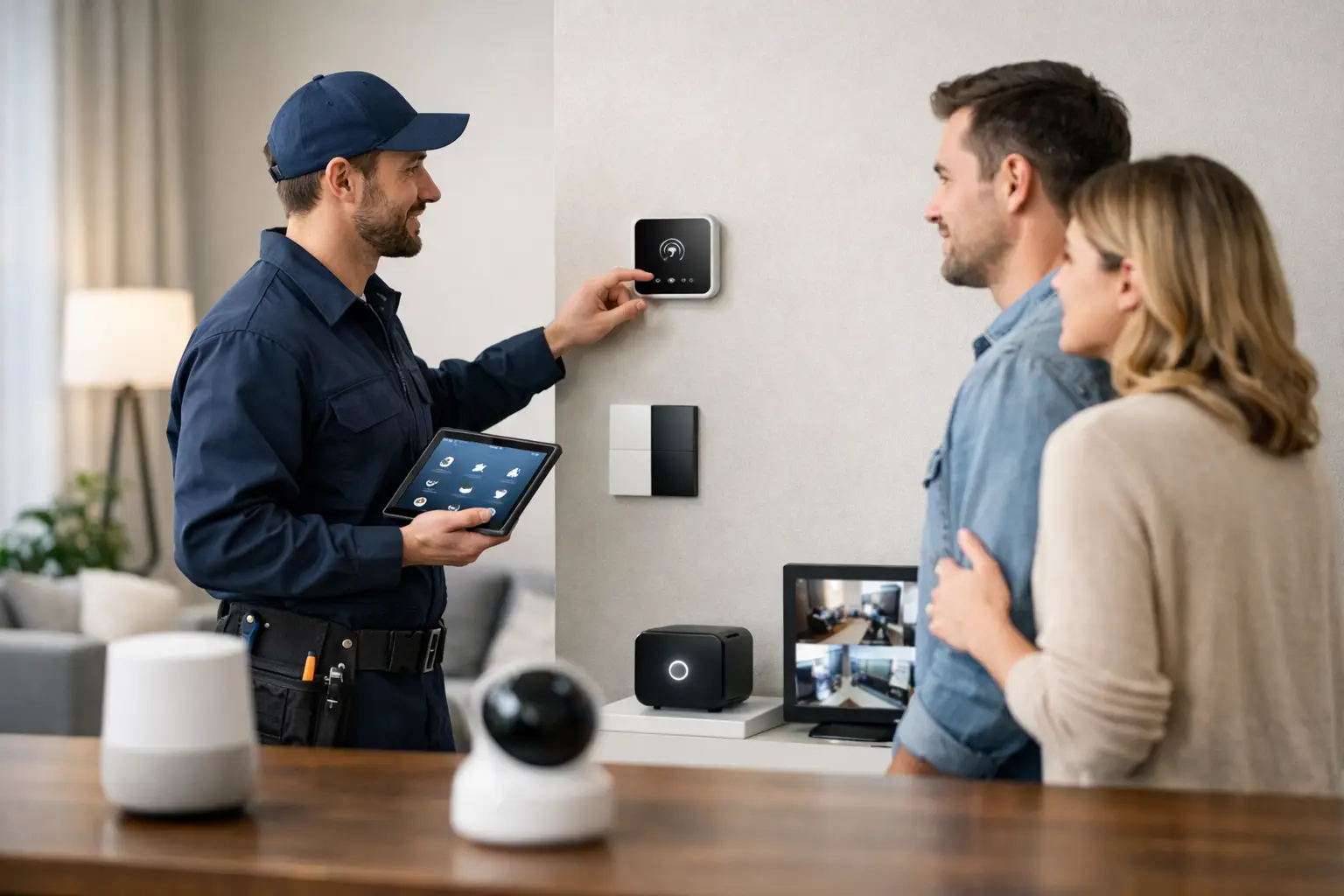
Most smart homes do not fail because the devices are bad. They fail because the system behind them was never designed to work as one. A professional smart home installation platform solves that problem by turning a pile of apps, hubs, and one-off automations into a managed system that actually behaves like part of the home.
That distinction matters more in 2026 than ever. Homeowners are buying premium lighting, motorized shades, multi-room audio, smart locks, cameras, HVAC controls, and energy devices from different brands. Builders and integrators are expected to make all of it feel polished on day one. And yet too many projects still rely on fragile workarounds, isolated ecosystems, or dealer-controlled platforms that make every change expensive.
A better model is emerging. It is open where it should be open, managed where it should be managed, and built for long-term flexibility instead of short-term lock-in.
What a professional smart home installation platform actually does
At the surface level, the job seems simple. Connect devices. Build scenes. Hand over an app. In practice, the platform carries much more weight than that.
It has to unify different protocols and brands under one control layer. It has to support reliable automations that continue working after firmware changes, internet outages, or product expansions. It has to give installers a clean deployment path and give homeowners a system they can live with every day without memorizing six different apps.
That is why the best platforms are not just dashboards. They are operating systems for the modern home. They manage device relationships, permissions, remote support, updates, and automation logic in one place. They reduce chaos behind the scenes so the experience at the wall switch, touchscreen, phone, or voice assistant feels simple.
For professionals, that changes the economics of a project. For homeowners, it changes the daily experience from “smart when it works” to quietly dependable.
Why old-school proprietary systems are losing ground
For years, premium automation was defined by closed systems. They promised reliability and white-glove service, but they often came with hard limits. Limited hardware choice. High programming costs. Slow feature evolution. Dependence on a specific dealer for even minor updates.
That model still fits some projects, especially ultra-custom estates with highly specialized control requirements. But for many custom homes and major renovations, it is starting to look dated. Homeowners want the freedom to choose devices that fit their style, budget, and performance goals. They do not want to rebuild the whole system because one vendor changed direction or stopped supporting a product line.
Installers feel the pressure too. Closed platforms can simplify certain tasks, but they also restrict what a professional can offer. If the answer to every request is “only if the ecosystem allows it,” the installer becomes less of a consultant and more of a gatekeeper.
An open, managed platform is a stronger answer for a broader share of the market. It protects design freedom without forcing homeowners to become hobbyists or forcing integrators to support a science project.
The features that separate a real platform from a pile of integrations
A true professional smart home installation platform starts with broad compatibility, but compatibility alone is not enough. Anyone can claim support for many devices. The real test is whether those devices can be orchestrated in a stable, supportable way.
The first requirement is centralized control. Lighting, climate, security, entertainment, and shading should not live in separate islands. The system needs one place to manage them and one experience for the homeowner.
The second is managed infrastructure. Open systems are powerful, but unmanaged open systems can become brittle if every project is hand-built from scratch. Pre-configured hardware, standardized deployment, managed updates, and remote diagnostics create consistency without giving up flexibility.
The third is automation intelligence. Rules should not stop at basic schedules or manual scenes. A modern platform should help translate household behavior into useful automations, whether that means adjusting lighting by time of day, coordinating HVAC with occupancy, or syncing shades with solar gain.
The fourth is privacy and local resilience. A smart home should not be fully dependent on cloud services for core functions. Remote access is valuable. Cloud convenience is valuable. But lighting, climate, access, and security workflows should still have a strong local backbone .
Finally, there is lifecycle support. Homes change. Devices age out. Families renovate, expand, and add new routines. A platform worth installing has to support evolution without forcing a rip-and-replace event every few years.
Why homeowners should care about the installer platform
Most homeowners never ask what platform their installer uses. They ask whether the shades will work, whether the theater is easy to control, and whether they will need to call someone every time they want a change.
Those are platform questions, whether they realize it or not.
If the installer is working on a fragmented stack of disconnected apps, the homeowner inherits that complexity. If the system depends on proprietary hardware with narrow compatibility, the homeowner inherits those constraints. If the installer has no remote management tools or standardized service process, the homeowner inherits slower support and more truck rolls.
The platform is the hidden architecture behind the experience. It determines whether the home feels unified or patched together. It affects cost, responsiveness, upgrade options, and how much control the homeowner actually keeps.
That is why the smartest buyers are asking different questions now. Not just “What devices do you install?” but “What system ties this all together?” and “Will I still have options five years from now?”
A better model for installers and integrators
Professional installers need more than compatibility charts. They need repeatability. They need a deployment process that reduces field friction, shortens setup time, and makes support profitable instead of painful.
A strong platform gives them templates, documentation, remote visibility, and standardized hardware that can be configured quickly without reinventing every project. It also gives them room to differentiate. That matters because no serious integrator wants to win business by offering the same narrow stack as everyone else.
There is a trade-off here. More flexibility can mean more design decisions, more testing, and a higher bar for system architecture. But when the platform is mature and professionally managed, that flexibility becomes an advantage rather than a burden.
This is where a company like Selora Homes stands out. It brings open-system power into a cleaner, more deployable format through pre-configured infrastructure, managed software, broad device support, and AI-assisted automation. That gives installers a platform they can confidently put into custom homes, while giving homeowners a polished experience that does not trap them in a single brand’s worldview.
Professional smart home installation platform for migration projects
New construction gets most of the attention, but migration is where platform quality becomes obvious. Many homeowners already own pieces of a smart home. They have Sonos in the living room, smart locks on the doors, a legacy lighting system, cameras from another brand, and a voice assistant trying to hold it all together.
Replacing everything is rarely the best answer. It is expensive, disruptive, and often unnecessary. A professional smart home installation platform should be able to absorb that complexity, preserve valuable hardware where possible, and create one coherent system from a messy starting point. That is exactly what a good smart home migration service is built to do.
This is not just a technical benefit. It is a financial one. Migration protects previous investments while improving daily usability. It also lets homeowners upgrade strategically instead of all at once.
For renovators and custom builders working with partially connected homes, that flexibility can be the difference between a realistic project and an overbuilt one.
How to evaluate a professional smart home installation platform
The right platform depends on the home, the installer, and the expectations for control. A vacation home with remote monitoring needs something different from a large custom residence with advanced AV, whole-home shading, and energy management.
Still, a few evaluation points matter almost every time. Ask how the platform handles mixed-brand environments. Ask whether key functions run locally. Ask what happens when you add new devices later. Ask how software updates are managed and how support is delivered. Ask whether changing installers means losing access to the system’s full capabilities.
That last question is especially revealing. If the platform keeps the homeowner dependent by design, that is not premium service. That is just polished lock-in.
The strongest platforms do the opposite. They give professionals the tools to deliver excellent service while preserving homeowner freedom and long-term compatibility.
The future belongs to managed openness
The smart home market is moving away from a false choice between DIY chaos and proprietary control. Homeowners want elegance without lock-in. Installers want flexibility without instability. The winning answer is a managed open platform that combines broad compatibility, professional deployment, intelligent automation, and long-term support.
That is what a modern professional smart home installation platform should deliver. Not more apps. Not more hardware for its own sake. A home that feels coordinated, responsive, and ready for what comes next.
If you are planning a build, a renovation, or a system overhaul, the smartest decision may not be which device you buy first. It may be choosing the platform that keeps every future decision easier.