
Remote Smart Home Management Explained
Remote smart home management explained: how centralized control, remote diagnostics, and managed updates keep a connected home reliable from anywhere.
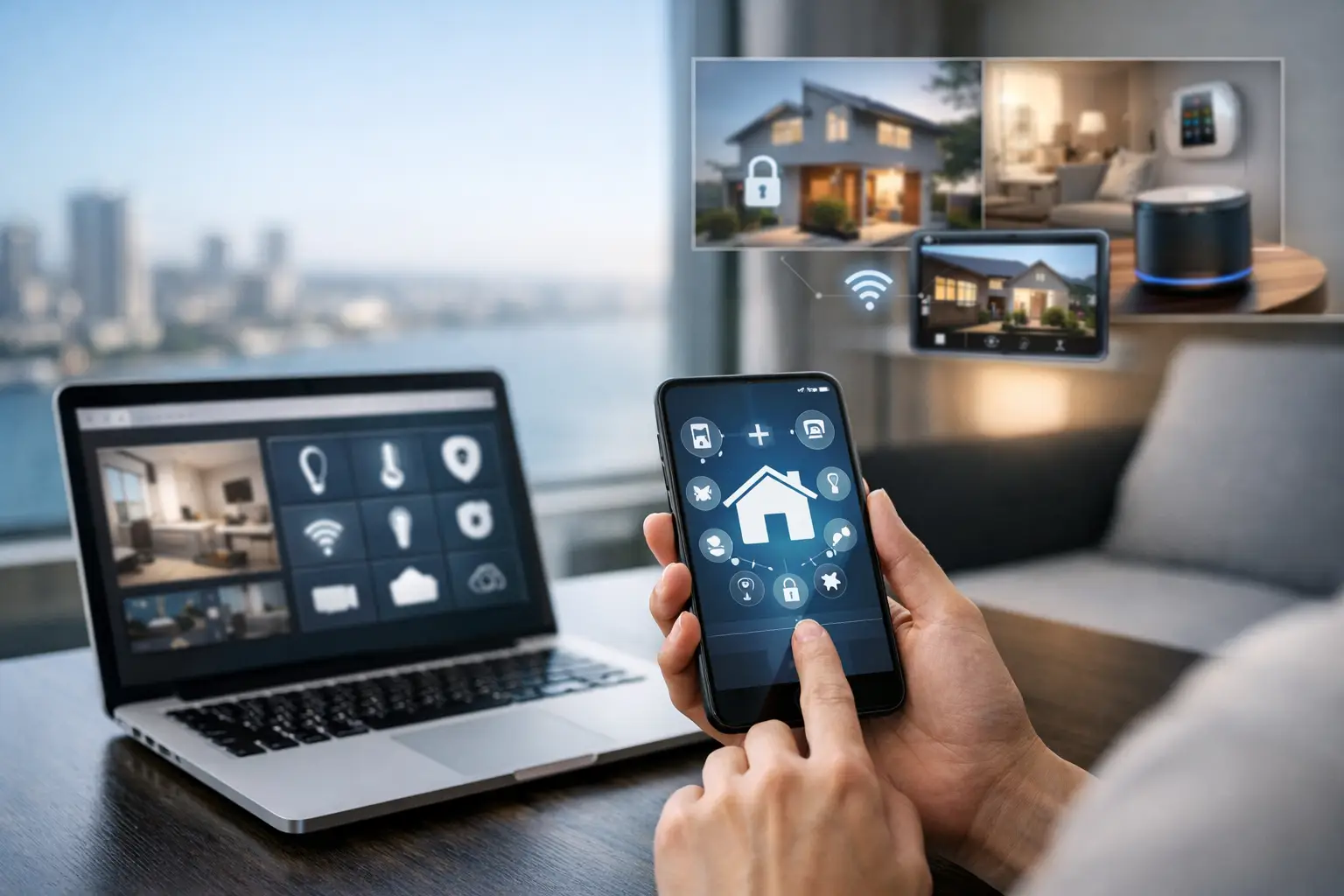
A garage door alert at 2:13 p.m. should not send you into three different apps, a text thread with your installer, and a guess about whether the house is actually secure. That is the real promise of remote smart home management. It is not novelty, but control when you are away, busy, traveling, or managing a second home.
For high-end homes, that matters more than most people expect. The larger and more connected a property becomes, the less practical it is to rely on room-by-room fixes, disconnected brand apps, or service calls for every change. Good remote management turns a smart home from a collection of devices into a system that can be monitored, adjusted, and supported without needing someone onsite every time something changes.
What remote smart home management actually means
Remote smart home management is the ability to access, monitor, troubleshoot, and update your home systems from anywhere through a centralized platform. That usually includes lighting, shades, climate, security, media, energy devices, and automations.
The key word is management. Remote access by itself is not enough. Plenty of homes let you open an app and turn a light on from the airport. That is convenience, but it is not the same as having a managed system that keeps devices organized, preserves automation logic, supports remote diagnostics, and allows updates without disrupting daily life.
In a well-designed setup, you are not bouncing between ten interfaces to figure out why the patio speakers disappeared, why the upstairs thermostat stopped following schedule, or why the entry lights no longer react to sunset. You are working from one operational layer that makes the whole house easier to run.
Why remote smart home management matters more in premium homes
In smaller DIY setups, the pain of fragmentation can be annoying but manageable. In custom homes, renovations, and second properties, it becomes expensive. More devices mean more dependencies. More brands mean more chances for inconsistency. And more automation means more need for oversight.
That is where remote smart home management changes the equation. It reduces the need for truck rolls, shortens support cycles, and gives homeowners more confidence that the system will keep up with real life. Schedules change. Guests arrive. Kids leave doors open. A media room gets reconfigured. A family adds battery storage or motorized shades. The smart home needs to adapt without turning every adjustment into a project.
There is also a financial angle. Proprietary automation platforms often make remote support feel like a premium privilege tied to one dealer relationship. Open, professionally managed platforms shift the value toward flexibility. You can keep broad device compatibility, centralized control, and remote support without signing up for long-term lock-in.
The difference between remote access and real remote management
This is where many homeowners get disappointed. A stack of brand-name devices can look impressive during installation and still create a poor ownership experience later.
Remote access is simple. You can log in and control a device. Real remote management goes further. It gives you visibility across the whole home, coordinated automations, managed software updates, alerting, and the ability for trusted support teams to diagnose issues before they become major frustrations.
That distinction matters because most smart home problems are not hardware failures. They are system-level issues. A lighting scene may fail because one device dropped off the network. A climate automation may stop working because a presence trigger changed. A home may feel unreliable not because the products are bad, but because no one is managing how they work together.
What a well-managed remote smart home should include
A strong remote management setup starts with centralized control. If lighting, audio, locks, thermostats, sensors, and shades all live in separate silos, support gets slower and the homeowner experience gets worse. One app and one management layer create a far cleaner daily experience.
It should also include remote diagnostics. When a device goes offline, an installer or support team should be able to investigate without driving to the property first. That saves time, but it also changes expectations. The home feels professionally maintained rather than occasionally repaired.
Managed updates are another major factor. Smart homes age in software as much as hardware. If updates are ignored, systems drift. If updates are pushed carelessly, automations can break. The right approach is controlled, tested, and visible.
Privacy matters too. Remote smart home management should not mean handing over unnecessary data or depending on cloud-heavy services for every command. For many homeowners, especially those investing in premium residences, privacy-first architecture is not a bonus. It is part of the buying decision.
Finally, the platform should stay flexible. Homes evolve. Devices get replaced. New categories get added. If your remote management setup only works with one tightly controlled hardware catalog, future upgrades become more painful and more expensive than they need to be.
Where remote smart home management delivers the most value
Travel is the obvious use case, but it is not the only one. Families use remote management to check that doors are secured after school, adjust temperature before arriving home, or confirm that lights and shades are following schedule while they are away.
Second homes benefit even more. If a property sits empty for part of the year, remote oversight helps catch issues early. You can monitor climate conditions, confirm occupancy-related lighting behavior, review alerts, and make changes without waiting until the next visit.
Renovation projects also create a strong case for centralized remote control. During phased upgrades, many homeowners end up with a mix of old systems and new devices. A managed platform can unify those pieces instead of forcing a full rip-and-replace on day one.
For installers, the value is just as clear. Remote management improves service economics. It reduces routine site visits, speeds up troubleshooting, and supports ongoing client relationships. That makes it easier to deliver a premium experience at scale.
The trade-offs homeowners should understand
Remote smart home management is not magic. It depends on solid infrastructure. If the home network is weak, remote support will always be limited. If devices were added randomly over time with no planning, unification may take some cleanup work first.
There is also a balance between openness and complexity. Open platforms are usually more flexible and better for long-term compatibility, but they need to be implemented well. The right answer is not closed versus open in the abstract. It is whether the system combines flexibility with professional management.
Some homeowners also assume that more automation always equals better automation. In practice, the best smart homes are selective. The goal is not to automate every possible action. The goal is to make the home predictable, comfortable, and easy to control from anywhere.
Choosing a platform for remote smart home management
Start with the ownership model. Ask whether you will be dependent on a single dealer, a narrow device list, or expensive onsite support just to maintain normal operation. Then ask how the platform handles remote access, updates, privacy, and multi-brand compatibility.
Look closely at migration potential. Many homeowners already have meaningful investments in lighting systems, audio equipment, voice assistants, security products, and climate devices. A good platform should preserve value where possible, not force unnecessary replacement.
This is where professionally managed, open systems stand apart. A platform like Selora Homes is built around centralized control, remote support, AI-assisted automation, and broad compatibility across existing ecosystems. That gives homeowners and installers a practical path forward, especially when the alternative is living with fragmented apps or paying proprietary-system pricing for less flexibility.
The best choice is usually the one that fits how the home will change over time. If you expect to expand, renovate, or integrate more systems later, future-proofing is not a marketing phrase. It is an operational requirement.
Remote smart home management is becoming the standard
As more households add connected locks, lighting, HVAC, media, and energy systems, manual oversight stops scaling. Homeowners want one place to see what is happening, make changes quickly, and get support without friction. Installers want platforms they can deploy confidently and maintain efficiently.
That is why remote smart home management is quickly moving from a nice feature to a baseline expectation. Not because it sounds advanced, but because connected homes are now complex enough to need real management.
The smartest homes are not the ones with the most gadgets. They are the ones that stay easy to live with, even when no one is home.