
The Best Savant Alternative for Modern Homes
Looking for a Savant alternative? See what a strong replacement needs: broad device compatibility, less dealer lock-in, privacy, AI-assisted automation, and lower cost over time.
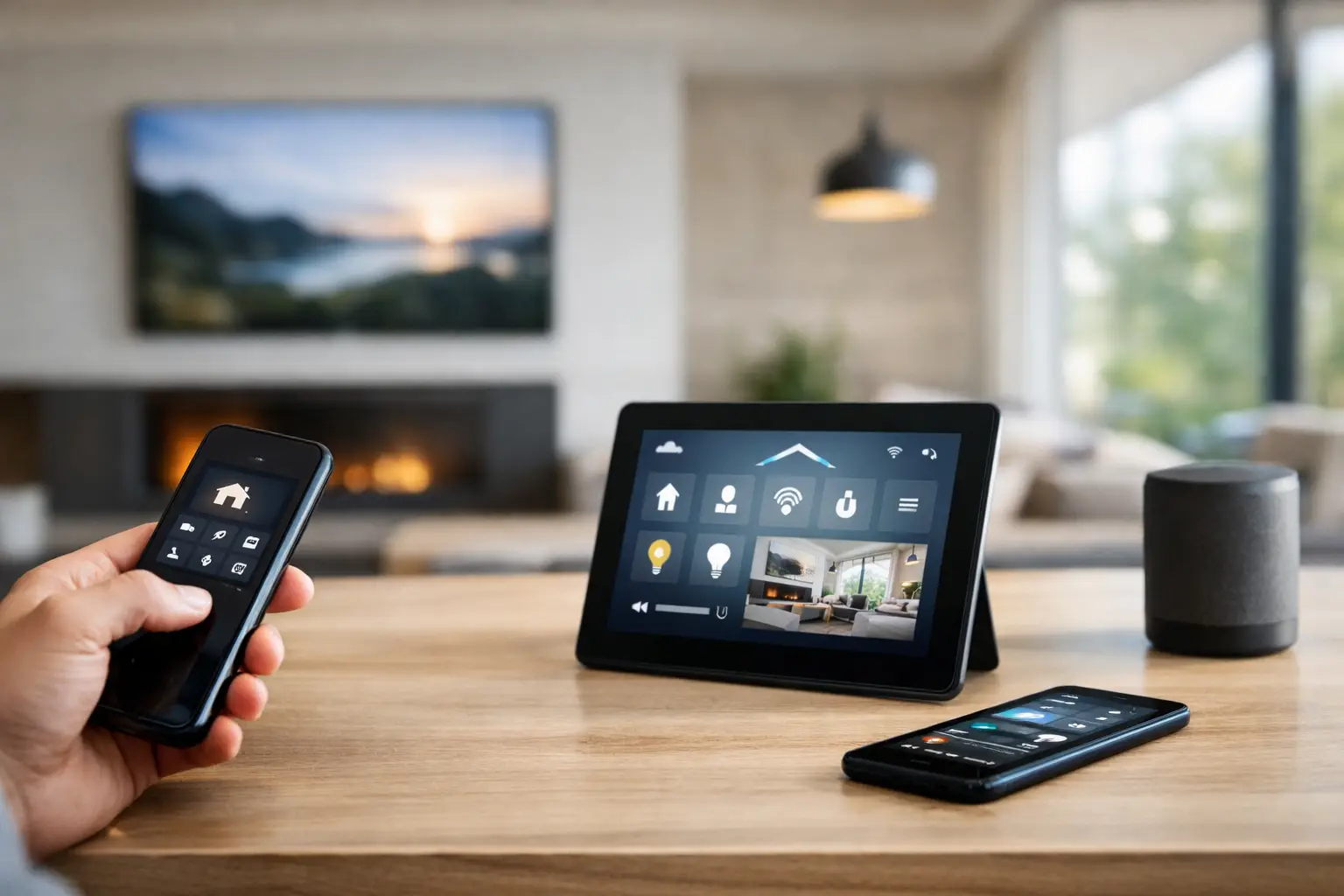
If you are searching for a savant alternative, you are probably not looking for a science project. You want a home that feels polished, reliable, and easy to live with - without signing up for a closed system that gets expensive to change, expand, or even service.
That is the real decision point. Savant has long been positioned as a premium smart home platform, especially in custom homes where lighting, AV, climate, and security need to work together. But premium does not always mean flexible. And for many homeowners and installers, flexibility is what determines whether a system still makes sense five years from now.
What makes a good Savant alternative?
A credible replacement for Savant needs to do more than copy the luxury pitch. It has to deliver the same sense of whole-home control while removing the biggest points of friction. That usually comes down to five things: compatibility, cost, support, privacy, and long-term freedom.
Compatibility matters because most homes are not built from a single brand. One room may have Lutron shades, another may have Sonos speakers , the front door may run on a smart lock from a different ecosystem, and the HVAC system may speak yet another language. A strong platform should bring those products together instead of forcing a rip-and-replace approach.
Cost matters because the sticker price is only part of the story. Dealer-only platforms often carry ongoing service fees in disguise. Small changes can require programming appointments. Device choices may be limited to approved hardware. Expansion can become more expensive than it should be.
Support matters because open systems without structure can be frustrating too. Most homeowners do not want to maintain automations like a part-time IT department. The best alternative balances flexibility with professional management, so the system stays powerful without becoming brittle.
Privacy matters because smart homes collect patterns about when you wake up, leave, return, and sleep. A platform should treat that data carefully, with architecture that favors homeowner control rather than unnecessary cloud dependence.
Long-term freedom matters because smart home platforms should age gracefully. If your preferences change, if a product line disappears, or if you want to add new devices later, the system should adapt.
Where Savant often falls short
Savant appeals to buyers who want a premium experience, but its model can feel restrictive once real-life needs start to change. The issue is not that it cannot deliver elegant control. It often can. The issue is how much control the homeowner actually has over the future of the system.
In many cases, changes flow through a dealer relationship. That can be fine during initial installation, especially in a large custom home. But over time, it can turn basic adjustments into scheduled service requests. If you want to add devices, revise scenes, or rethink how spaces behave, the process may feel slower and more expensive than it should.
There is also the question of hardware freedom. Proprietary platforms tend to work best when you stay within their preferred lane. That may simplify parts of deployment, but it can limit your options. If you already own devices from multiple ecosystems, or if you want the freedom to choose best-in-class products by category, a closed approach starts to feel dated.
This is why the search for a Savant alternative is rarely about abandoning luxury. It is usually about keeping the polished experience while getting rid of the lock-in.
The best Savant alternative is open, but managed
There are plenty of DIY smart home platforms that promise freedom. The problem is that freedom without structure can become another kind of burden. Affluent homeowners want elegant control, not a weekend troubleshooting hobby. Installers want fewer surprises in the field, not more.
That is why the strongest answer is not simply an open platform. It is an open platform that is professionally managed.
A managed system combines broad device compatibility with a stable operational layer. Updates are handled in a controlled way. Remote support is available when something needs attention. Automations can be created and refined without rebuilding the entire house around one vendor’s rules. This approach gives you the benefits of openness without the chaos people often associate with enthusiast-grade smart home setups.
For homeowners, that means one app, one place to manage the house, and a system that can evolve with the property. For installers, it means a production-ready platform that is easier to deploy repeatedly and support efficiently.
Cost is not just purchase price
When people compare platforms, they often focus on initial hardware and installation. That is understandable, but it misses the bigger financial picture. A better Savant alternative usually wins over time, not just on day one.
The first savings come from hardware flexibility. If a platform supports a wide range of lighting, audio, climate, security, and sensor products, you can choose the right product for each job instead of buying into one prescribed stack.
The second savings come from service efficiency. Systems that allow managed remote support reduce unnecessary truck rolls and service appointments. That is especially valuable in larger homes where even minor adjustments can become inconvenient.
The third savings come from migration. Many homeowners already have pieces of a smart home spread across Apple HomeKit, Google Home, Alexa, Sonos, Lutron, Z-Wave, KNX, or legacy automation systems. A platform that can unify those investments protects what you already own instead of treating it as disposable.
A lower total cost does not mean a cheaper-feeling experience. Done right, it means spending money where it improves daily life rather than where it funds ecosystem restrictions.
Privacy and control are becoming luxury features
There was a time when smart home buyers mostly asked what a system could do. Now they are also asking where data goes, who can access it, and how dependent the home is on external cloud services.
That shift matters. In premium homes, privacy is no longer a side topic. It is part of the product.
A strong Savant alternative should be designed with homeowner control in mind. That means minimizing unnecessary exposure, supporting local operation where appropriate, and making remote access feel intentional rather than intrusive. Convenience still matters, of course. But convenience should not require handing over more household intelligence than necessary.
The best systems make the house smarter while keeping ownership clear.
Why AI changes the comparison
This is where the market is moving fastest. Traditional luxury automation systems were built around custom programming. That model still has a place, especially for highly specialized projects, but it is not the only way to create a refined home.
AI introduces a more adaptive approach. Instead of relying entirely on manual rule-building, the system can observe patterns, suggest automations, and help fine-tune how the home responds. If the family tends to dim lights, lower shades, and adjust climate settings around the same time each evening, that behavior can become the basis for practical automation without starting from a blank page.
Used well, AI reduces setup friction. It also helps systems improve over time rather than remaining static after installation. For homeowners, that means less programming overhead. For installers, it means faster deployment and easier optimization.
This is one of the clearest lines between older proprietary models and newer platforms built for long-term adaptability.
Who should switch to a Savant alternative?
Not every project needs to move away from Savant. If you are fully invested, happy with the service model, and do not expect the system to change much, staying put may be reasonable.
But many buyers should seriously consider a different path. If you already have devices across multiple brands, if you want to avoid dealer dependence for every adjustment, if privacy matters, or if you want your home to stay compatible with future hardware, an open and professionally managed platform is the better fit.
The same is true for renovation projects. Remodels often expose the limitations of proprietary systems because they force decisions room by room. A platform that can absorb existing products, add new ones, and unify everything under a single control experience is simply more practical.
For installers, the case is just as strong. Clients increasingly want premium outcomes without platform lock-in. A system that combines broad compatibility, managed support , and AI-assisted automation creates a better handoff and a better service business.
Selora Homes is built around that exact shift - a professionally managed, open smart home platform that gives homeowners and installers luxury-grade control without the proprietary baggage.
The smartest homes are no longer the ones with the most branded hardware. They are the ones that stay elegant, adaptable, and easy to own long after installation day.