
Selora AI LLM Moves to One Model
The Selora AI LLM adapter bundle, a base model plus five adapters, is deprecated and frozen at v0.8.1. Its replacement is a single model that runs anywhere llama.cpp or Ollama does. Your Hub keeps working.
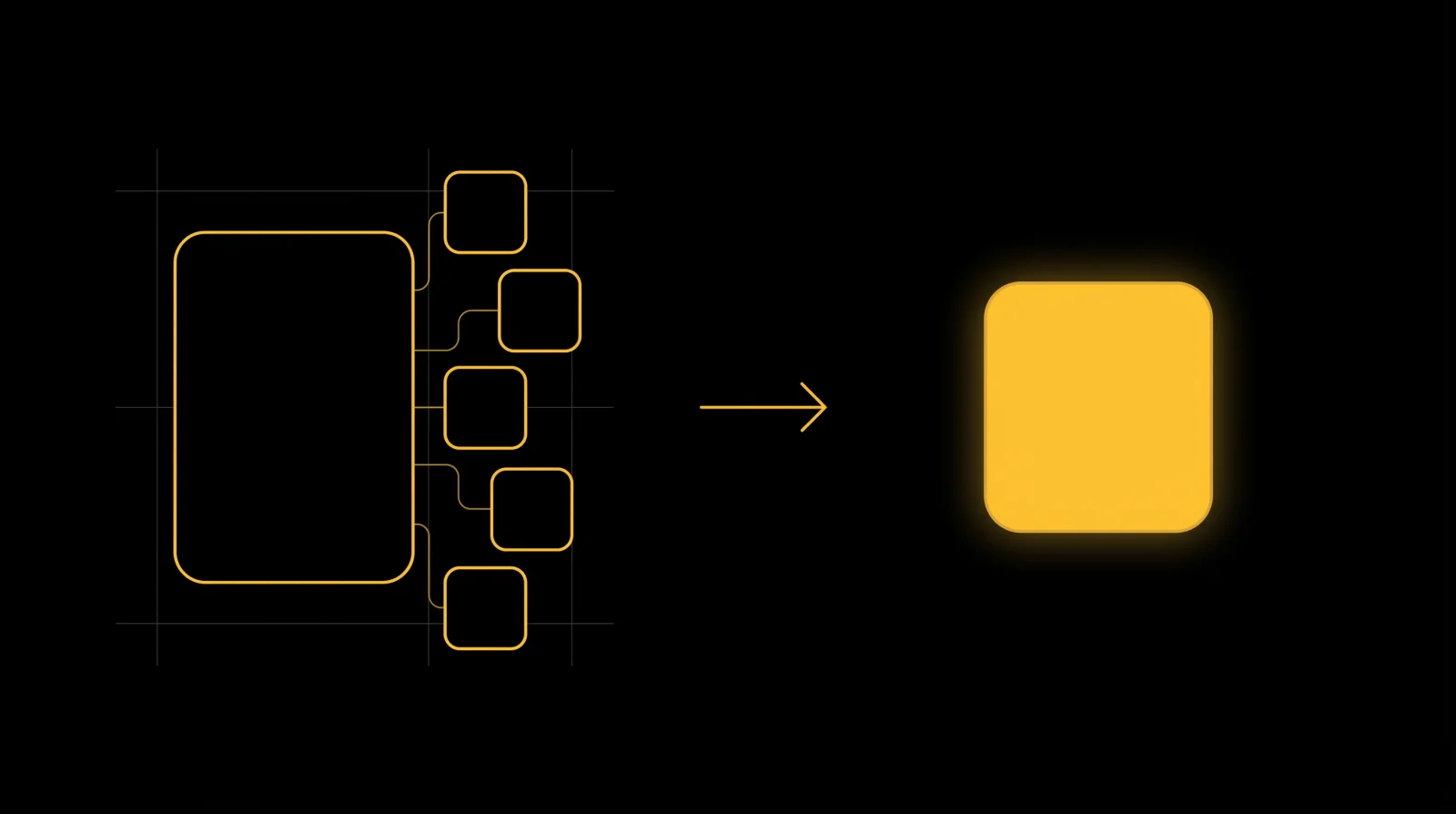
Selora AI Local used to be a base model plus five specialist adapters, swapped in one at a time. That bundle is now deprecated: from here on, Selora AI LLM is one model that handles every kind of request on its own. Your Selora Hub keeps working as it does today, and the upcoming Selora AI 1.3.0 will move it to the new model.
What’s changing
Until v0.8.1, released on November 5, Selora AI LLM was a Qwen3 base model plus five small add-ons called LoRA adapters, one per type of response:
- command: turn something on, off, up or down
- automation: write an automation
- answer: answer a question about your home
- clarification: ask you what you meant
- utilities: everything else
For each request, the Home Assistant integration picked the right adapter and loaded it on top of the base model.
The new model does that choice itself. We trained a single adapter on the examples for all five response types, then merged it into the base, so what you download is one ordinary model file (a GGUF). Its system prompt tells it how to pick the kind of response each request needs.
Because it is one file, it runs anywhere llama.cpp or Ollama does, including runtimes that cannot swap adapters in and out.
It still comes in the same two sizes:
- 1.7B, built on Qwen3 1.7B, runs on every Selora Hub.
- 14B, built on Qwen3 14B, needs about 16 GB of memory for the model and Home Assistant together.
What it means for you
You own a Selora Hub. Nothing changes today, and you have nothing to do. Your Hub keeps using the v0.8.1 bundle, which keeps working. The upcoming Selora AI 1.3.0 will switch it to the single model.
You run Selora AI with Ollama yourself. Switch to the new
repositories. For the 1.7B, download the model and name it selora-qwen,
which is the name the integration looks for:
ollama pull hf.co/selorahomes/Selora-AI-LLM-1.7B-ollama:selora-ollama.Q6_K.gguf
ollama cp hf.co/selorahomes/Selora-AI-LLM-1.7B-ollama:selora-ollama.Q6_K.gguf selora-qwen
The 14B lives at selorahomes/Selora-AI-LLM-14B-ollama . In the integration, set the Selora AI Local runtime to Ollama (single self-routing model). The Selora AI Local docs walk through it.
You run llama.cpp’s server yourself. Keep the adapter bundle for now. Selora AI 1.3.0 adds the single model to the llama-server runtime.
You pinned the adapter repositories. Selora-AI-LLM-1.7B and Selora-AI-LLM-14B stay online, frozen at v0.8.1, and you can still download them. Nothing new will be published there: no retraining and no fixes. Every improvement from now on goes into the single model.
Quality
We ran both versions through the community Home Assistant datasets benchmark , on the full datasets, through the integration, at temperature 0. Each cell shows two scores: with overrides, where the integration’s built-in rule-based handlers answer the requests they recognise, and model only, where the model decides every turn.
1.7B
| Dataset | Bundle v0.8.1 (overrides / model only) | One model (overrides / model only) |
|---|---|---|
| assist | 91.5 / 88.0 | 92.4 / 90.2 |
| assist-mini | 100.0 / 95.9 | 100.0 / 95.9 |
| questions | 94.6 / 94.6 | 94.6 / 94.6 |
| automations | 100.0 / 100.0 | 100.0 / 100.0 |
14B
| Dataset | Bundle v0.8.1 (overrides / model only) | One model (overrides / model only) |
|---|---|---|
| assist | 92.2 / 87.8 | 90.2 / 87.0 |
| assist-mini | 100.0 / 95.9 | 100.0 / 95.9 |
| questions | 94.6 / 94.6 | 94.6 / 94.6 |
| automations | 100.0 / 100.0 | 100.0 / 100.0 |
The 1.7B gets slightly better on device requests (assist) and holds everywhere else. The 14B holds on three datasets but loses 2 points on assist with overrides, and just under 1 point model only. We would rather tell you that than round it away. Every later fix for the 14B now ships through the single model, and the old bundle will not get one.
Why we did it
One model is simpler to run. There is no adapter to swap per request and no waiting for another request to release the model. It works in Ollama and other single-model runtimes exactly as we publish it, with no extra setup.
It takes less memory. The old bundle kept the base model and all five adapters loaded at once. The single model has no adapters to hold, and on the 1.7B it also drops a duplicate copy of one layer that the old base model carried. The 1.7B’s weights go from 1.7 GB to 1.4 GB, about 20% less, which leaves more room for Home Assistant on the same Hub. The 14B saves about 250 MB.
Fixes reach you faster. Five adapters meant five training runs and a bundle of six files to test together. Now there is one training run and one file to test and ship.
We tried the shortcut first. Our first idea was to merge the five existing specialists into one. It didn’t work: the adapters interfered with each other, and no mix of them got the original quality back. Training one adapter on all five response types together did, as the tables show.
Links
- Selora-AI-LLM-1.7B-ollama on Hugging Face
- Selora-AI-LLM-14B-ollama on Hugging Face
- Selora AI integration
- Selora AI Local documentation