
Selora AI v0.10.0: Selora AI Local, Your Home's First Private LLM
Selora AI v0.10.0 introduces Selora AI Local, a purpose-built LLM that runs entirely on your own hardware, alongside an in-place scene editor, a label-driven suggestion ignore list, scoped MCP write access, and a long list of robustness fixes.
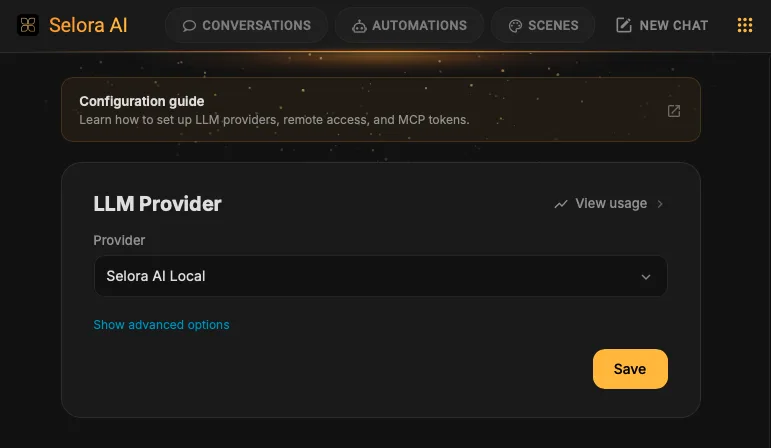
Selora AI v0.10.0 is out, and it is the release we have been building toward. It introduces Selora AI Local, our own LLM that runs entirely on your hardware. No cloud calls, no API keys, no data leaving your network. Point the integration at your inference box and chat with your home.
This is the first step on a road we care deeply about: home management driven by AI that is private and secure by default, not as an afterthought.
Selora AI Local
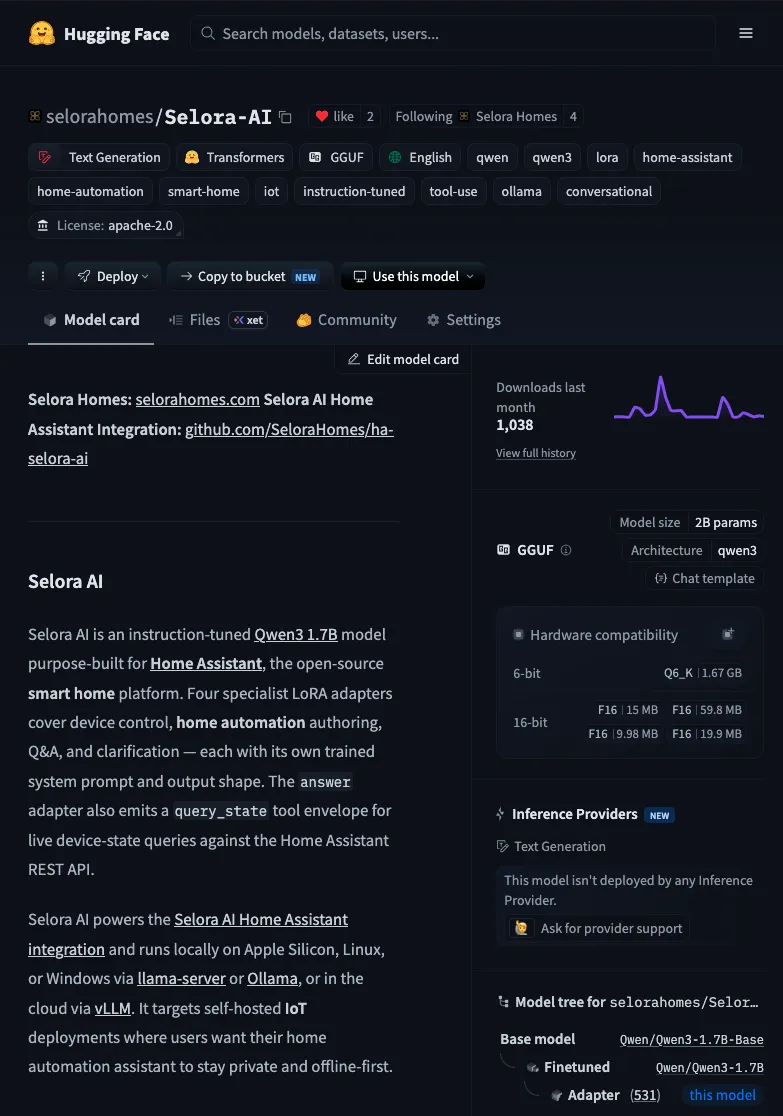
Selora AI Local is a purpose-built local LLM for Home Assistant, tuned for
automation authoring, device control, and the kind of multi-step “what’s
going on in my house” questions that cloud models charge per-token to
answer. The model is open and available on Hugging Face:
selorahomes/Selora-AI
.
v0.10.0 ships the integration side of model v0.4.7.
Setup is a single choice in the config flow: pick “Selora AI Local”, point it at your inference box, and save.

- One-click provider in the config flow. Pick “Selora AI Local” during setup, point it at your inference server, done. No prompt tuning, no model selection, no token accounting.
- Editable host in Settings. Move the inference box to a new IP without removing and re-adding the integration.
- New wire format, system prompt, and validator matched to model v0.4.7. Dedicated detector tests guard the local-only paths in CI.
- Smarter entity ranking with fallback. When the prompt window can’t fit every matching entity, the model sees the most relevant ones first; a fallback pass kicks in when filtering returns nothing.
- Identity short-circuit. “What are you?” and “Who built you?” style questions answer locally without burning a model turn.
- Higher answer and clarification caps so multi-step replies don’t get truncated mid-thought.
If you have been holding off on Selora because of the cloud dependency, this is the release to install.
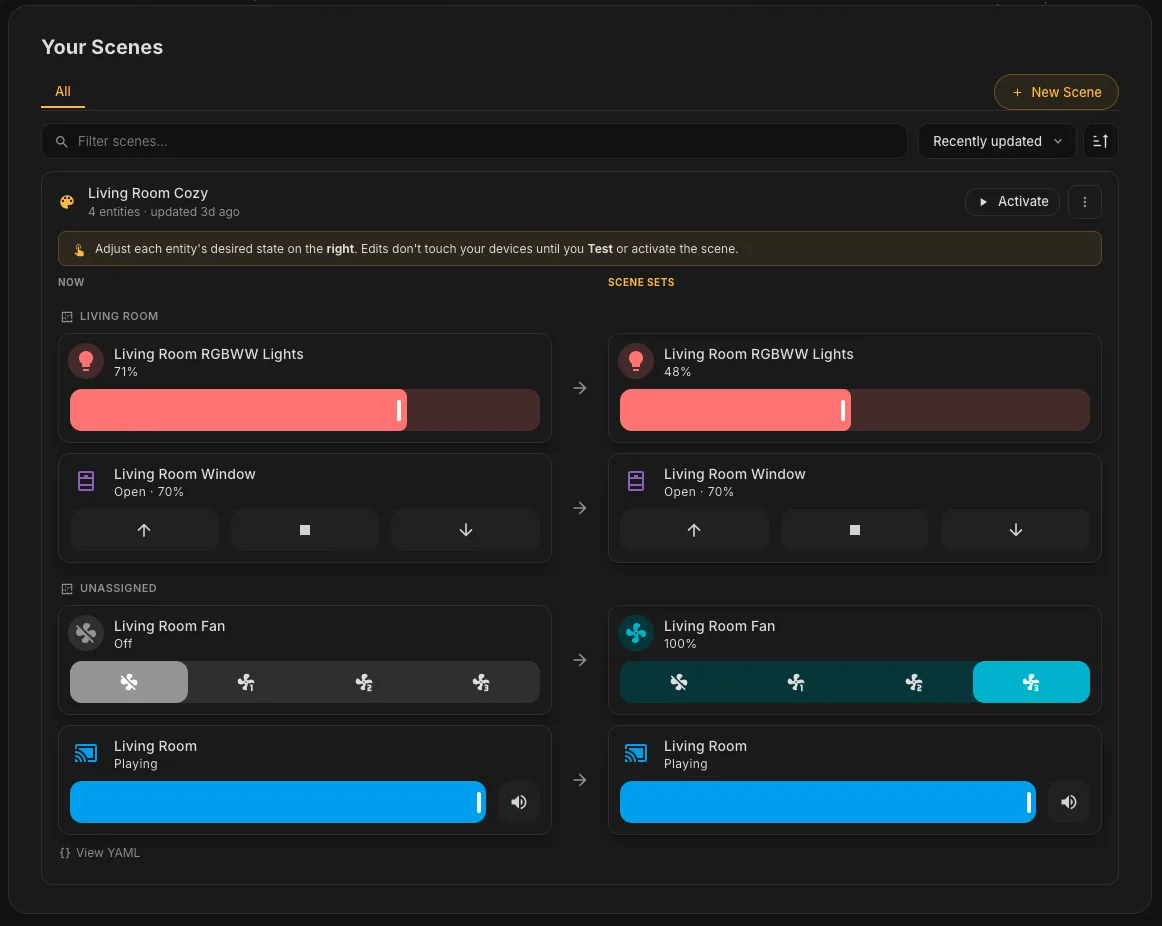
Scenes: in-place desired-state editor
You can now edit a scene’s target state directly from the scene card, with live previews and inline validation. The flow no longer punts you out to YAML for the common cases.
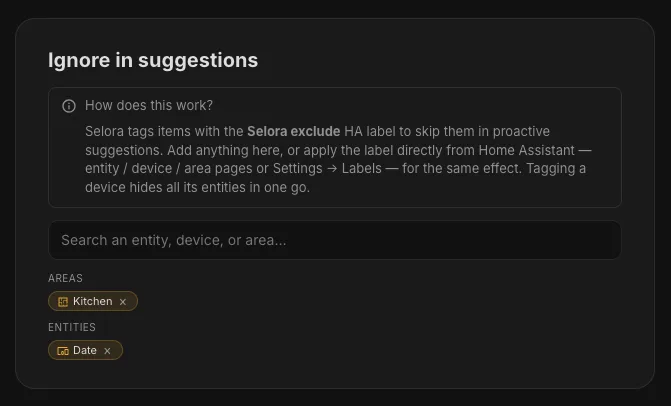
Suggestion ignore list
Mark entities, devices, or whole areas as off-limits for Selora’s pattern
engine using a standard Home Assistant label (selora_ignore). A new
panel section shows what’s currently ignored and lets you bulk-edit it.
The collector, pattern engine, and suggestion generator all honor it.
MCP write scope
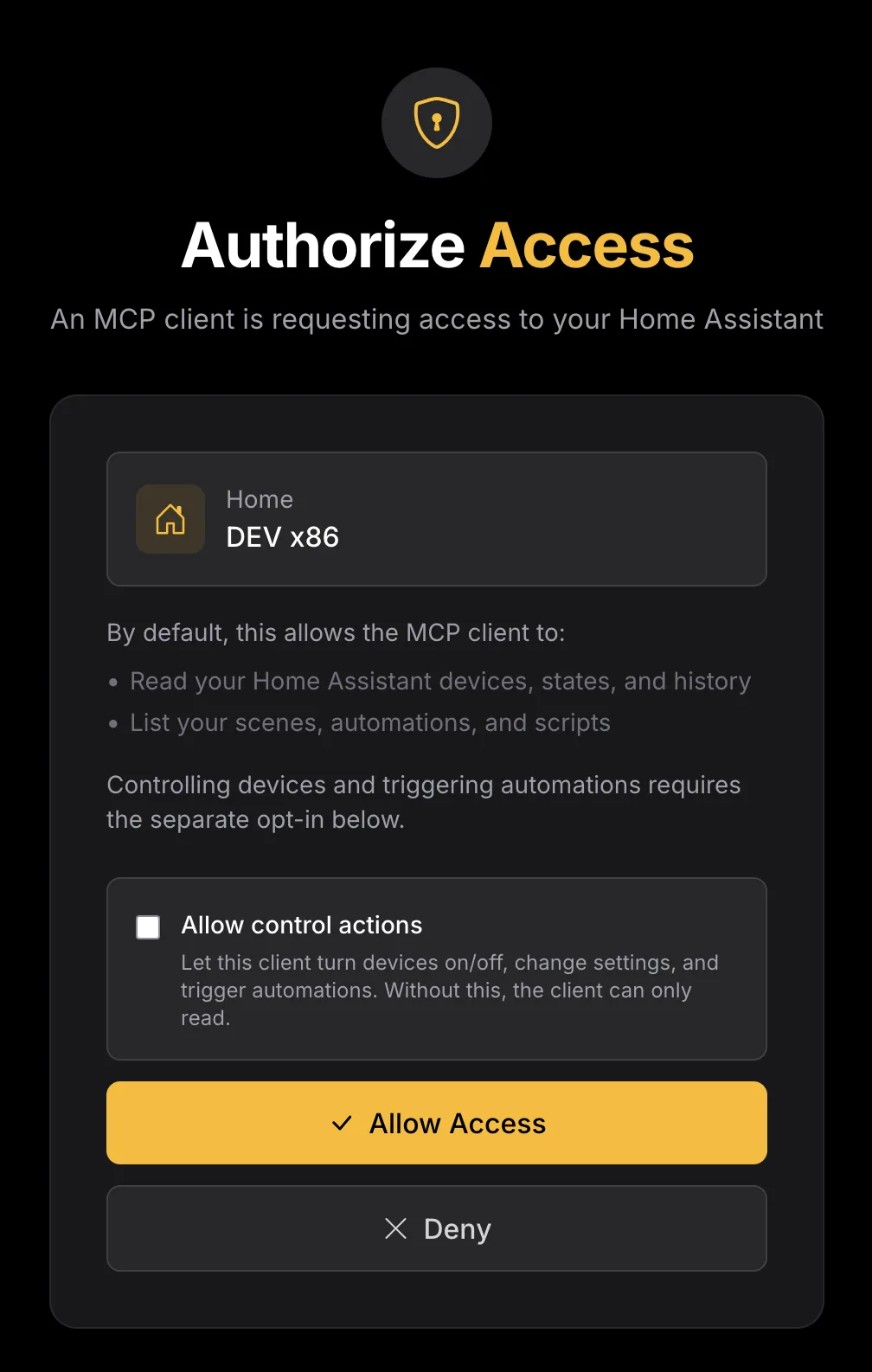
The Selora MCP server now gates every state-mutating tool behind an
mcp:write JWT scope. Read-only tools stay open under the default token;
writes require a token explicitly issued with write rights. Existing
tokens keep working for reads.
Other improvements
- Sparkles animation speeds up while the LLM is thinking, so the panel actually feels live during long generations.
- Parsers now humanise “unknown entity” errors and auto-correct obvious
domain typos (
lights.kitchentolight.kitchen) before rejecting the automation. - Scene blocks with trailing prose from the model no longer fail to parse.
Fixes
- Presence and duration automations: closed gaps where presence triggers paired with duration conditions would fail validation or fire incorrectly.
- OAuth callback now picks the panel origin instead of guessing, fixing edge cases behind proxies.
eval_templateis now properly scoped to the calling tool, with no more cross-tool template bleed.- Collector boot: the first collection cycle is deferred so HA startup isn’t blocked.
recorder_historycapped by record count to keep memory bounded on busy installs.- Python 3
exceptsyntax cleaned up across the integration (caught by ruff after the 3.14 bump). - Flow-entity-link styling restored after the CSS split regression.
Upgrade notes
- MCP write users: re-issue any token that needs to call write tools,
with the
mcp:writescope included. Read-only tokens are unaffected. - No config-flow migration needed; existing entries keep working.
See the full changelog for the complete list.
What’s Next
We are now focusing on v0.11.0, with Recipes and insights. We are also re-training the model to help troubleshoot Home Assistant, though that work might not land in v0.11.0.
Update via HACS, or if you already have Selora AI installed, the update will appear in your Home Assistant settings. Selora Hub customers get the update automatically on the next maintenance window.