
Smart Home Migration Service
A smart home migration service unifies your devices into one managed platform. Keep the hardware that works, retire what limits you, and gain a home that runs better.
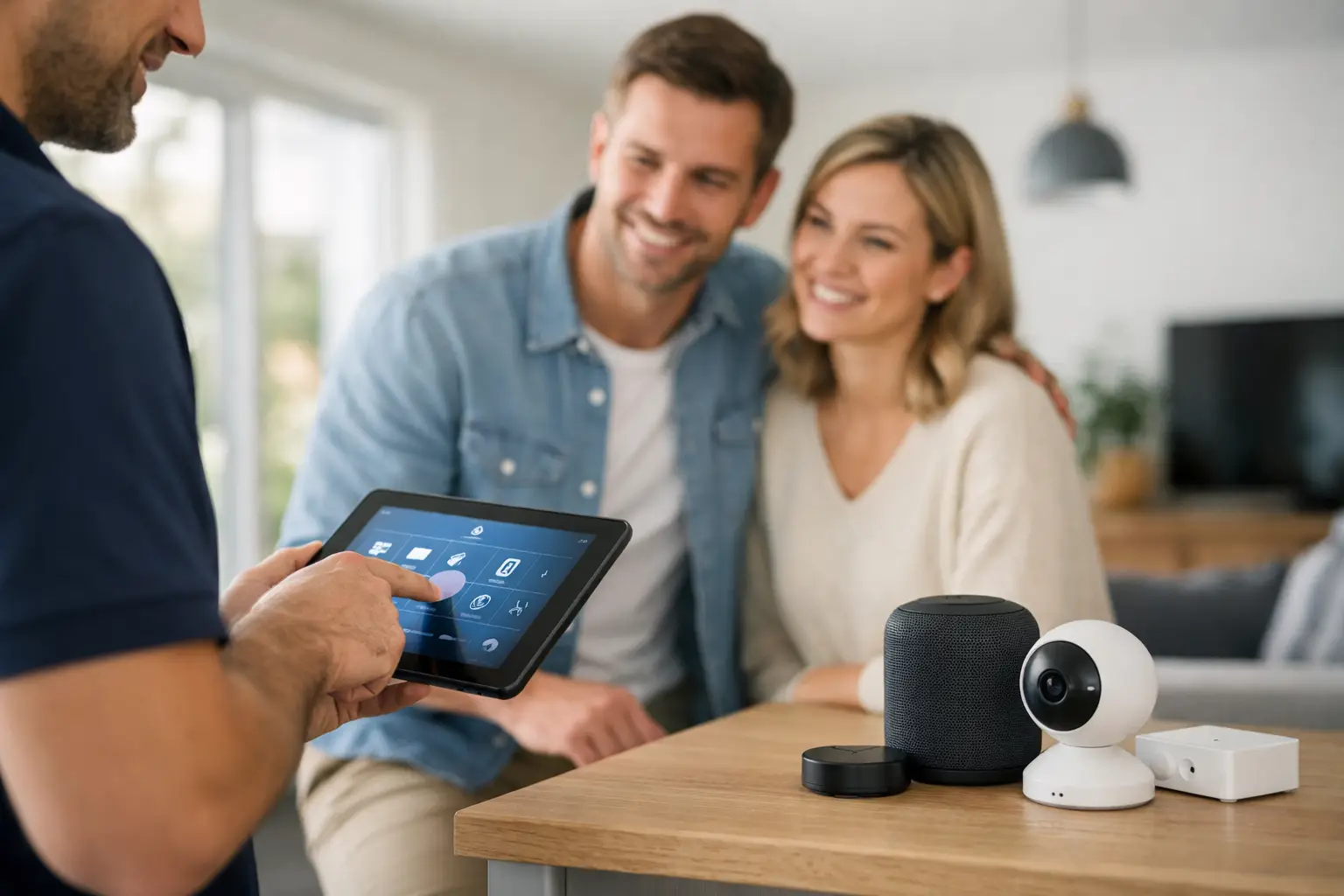
You notice it when guests ask how to turn on the patio lights and the answer takes three apps, one wall keypad, and a voice assistant that only works half the time. That is usually the moment a smart home migration service stops sounding optional and starts sounding overdue.
Most smart homes do not fail because the hardware is bad. They fail because they were built in layers. A thermostat from one brand, lighting from another, audio in its own app, cameras somewhere else, and a few automations stitched together by whoever installed the last device. It works, until it does not. Then every change feels expensive, every update carries risk, and every routine depends on tribal knowledge.
A proper migration is not just a device transfer. It is a redesign of how the home is managed. The goal is simple: one system for control, automation, remote support, and future upgrades, without forcing the homeowner to throw away every product they already own.
What a smart home migration service actually does
At the surface level, a smart home migration service moves your devices and automations into a unified platform. In practice, it does much more. It audits what is installed, identifies what should stay, flags what is limiting performance, and creates a stable architecture that can support lighting, shades, climate, security, entertainment, and energy systems together.
That distinction matters. Plenty of homes already have expensive components in place. Lutron lighting, Sonos zones, Z-Wave locks, KNX devices, Apple HomeKit scenes, Google Home voice control, maybe even remnants of a Control4 or Savant installation. Replacing everything is rarely the smartest move. The better path is usually to preserve the hardware that still adds value and migrate control to an open, professionally managed platform.
This is where homeowners save more than money. They regain leverage. When your home depends on one closed ecosystem, every small change can require the same dealer, the same markup, and the same service model. Migration shifts the center of control back to the homeowner and their chosen integrator.
Why homeowners migrate in the first place
The first reason is fragmentation. Multiple apps are not a luxury problem. They are a usability problem. If shades live in one app, climate in another, and media in a third, the system never feels finished. Family members stop using it properly. Guests avoid it. The home starts acting less intelligent than a standard switch on the wall.
The second reason is lock-in. Many premium systems were sold as complete answers, but they often tie future changes to proprietary hardware, dealer-only programming, or limited compatibility. That model can feel acceptable on day one. It feels very different five years later, when a simple upgrade turns into a costly negotiation.
The third reason is support. Smart homes need software maintenance now. Devices update. APIs change. New products enter the home. If the platform cannot be maintained remotely and professionally, small issues pile up into daily friction.
Then there is the renovation factor. Remodels, additions, and whole-home upgrades create a rare window to fix structural problems in the smart home stack. If walls are opening and systems are already being touched, it makes sense to rethink control at the same time.
What a good migration looks like
A strong migration starts with an audit, not a sales pitch. Every relevant system should be inventoried: lighting, shades, thermostats, audio, TVs, locks, doorbells, cameras, sensors, network gear, and voice assistants. The point is to map dependencies before anyone promises results.
From there, the migration plan should separate devices into three groups. Some are worth keeping because they are reliable and integrate well. Some should stay temporarily because replacement is not urgent. Others should be retired because they create instability, weak security, or poor user experience.
That middle category is where experience matters. Not every legacy device needs to disappear on day one. A smart migration respects budget, timeline, and disruption. It builds toward a better system instead of forcing a wasteful reset.
Control is the next major shift. Instead of each subsystem running in isolation, the home moves to a single operational layer. That is where scenes, schedules, presence logic, notifications, and remote support come together. The best result is not just centralization. It is consistency. Buttons behave the same way. Rooms follow the same logic. The app feels coherent. The system becomes easier to use because it is easier to understand.
The trade-offs nobody should ignore
Migration is almost always better than starting from scratch, but it is not magic. Some products simply do not belong in a long-term design. Consumer-grade devices that depend on cloud APIs can be unpredictable. Niche brands may integrate today and disappear tomorrow. Older hubs can become bottlenecks even if the endpoint devices are still fine.
There is also a difference between compatibility and experience. A device might technically connect to a platform but still offer limited controls, delayed feedback, or unreliable status updates. That is why integration lists alone do not tell the full story. What matters is how the device behaves in daily use.
Homeowners should also expect a standards conversation. The strongest systems tend to blend wired and wireless technologies based on the application. High-value lighting control may justify one approach, while battery sensors or retrofit devices may justify another. There is no serious one-size-fits-all answer in custom homes.
And yes, migration can reveal network issues. Many smart home complaints that look like automation problems are actually Wi-Fi design problems, poor IP planning, or weak segmentation. A good provider will say that early rather than hiding it until after the install.
Why open architecture wins over time
A closed smart home can look polished at handoff. The real test is what happens over the next decade.
Open architecture gives you room to adapt. You can keep proven hardware, add new categories over time, and avoid rebuilding the entire system because one vendor changed direction. It also improves negotiating power. Homeowners are not trapped into a single upgrade path, and installers are not forced to defend platform limits they do not control.
That openness matters even more now that automation is becoming more behavior-driven. AI-assisted routines, occupancy patterns, energy logic, and remote diagnostics all work better when data and device control are not siloed across disconnected apps. The future of the smart home is not more dashboards. It is a better operational layer behind the scenes.
A professionally managed hub model is often the most practical expression of that idea. It gives the home a stable center for updates, remote access, support, and automation while preserving flexibility at the device level. That is a smarter foundation than betting the whole property on a brand-specific universe.
Smart home migration service for remodels and custom homes
If you are building or renovating, timing matters. A smart home migration service is most effective when it is planned alongside electrical, lighting design, AV, shades, and security. That does not mean everything needs to be purchased at once. It means the architecture should be decided before the house is finished.
For remodels, this often means using the opportunity to clean up years of improvisation. Wall controls can be rationalized. Legacy bridges can be removed. Audio and TV control can be standardized room by room. Automations that were once impossible because systems did not talk to each other can finally become normal behavior.
For custom homes, migration may sound like the wrong word if the house is new, but many projects still involve device carryover, builder-standard products, or partial systems inherited from an earlier phase. The same principle applies: unify first, then scale.
Selora Homes approaches this category the right way by treating migration as a professional systems project, not a gadget swap. That is the difference between getting a cleaner app screen and getting a home that actually runs better.
How to tell if you are ready
If your smart home depends on workarounds, if your family avoids certain features because they are inconsistent, or if every upgrade starts with the phrase “let me call the dealer,” you are ready. If you are planning a renovation, taking over a home with existing automation, or trying to unify Apple, Google, Alexa, Lutron, Sonos, Control4, KNX, or Z-Wave under one roof, you are definitely ready.
The right migration does not ask you to abandon good hardware or relearn your home every few years. It gives you one place to manage the experience, one strategy for long-term support, and one system that can keep evolving as the house does.
A smart home should not feel like a stack of compromises. It should feel settled, intentional, and ready for what comes next.