
Smart Home Platform for Installers That Scales
A smart home platform for installers decides how fast you deploy, how often you roll a truck, and whether mixed-brand homes stay stable long after handoff. Here is what to look for.
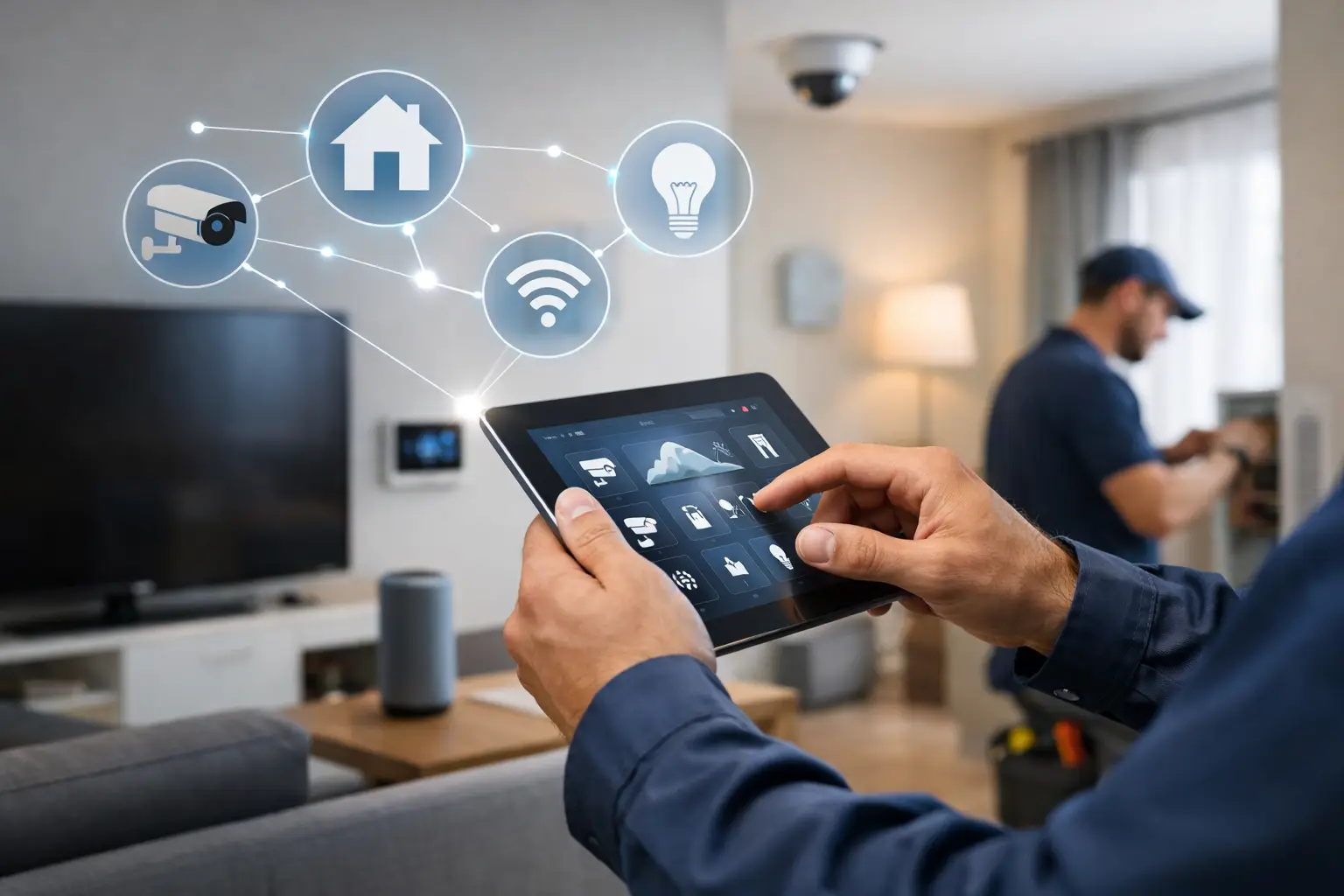
Every installer has seen the same job go sideways for the same reason: the hardware worked, but the platform didn’t. A smart home platform for installers is not just a control layer. It decides how fast you can deploy, how often you roll a truck, how painful change orders become, and whether a client calls you six months later with confidence or frustration.
That is why platform choice matters more now than it did a few years ago. Homes are more connected, clients expect more personalization, and projects rarely stay inside one brand family. Lighting may come from one vendor, climate from another, audio from a third, and security from something the homeowner already bought before you were even in the picture. If your platform only behaves when every device follows the same logo, you are not running a modern smart home business. You are managing a constraint.
What a smart home platform for installers should actually solve
Installers do not need another flashy app demo. They need a system that reduces friction in the field and keeps finished projects stable. That starts with broad device compatibility, but compatibility alone is not enough. Plenty of systems can connect to a lot of products in theory. The real question is whether the platform can bring those products into one reliable, supportable experience.
A strong installer platform should make mixed-brand environments feel intentional, not patched together. It should let you standardize deployment across custom homes, retrofits, and production projects without forcing every client into the same rigid stack. It should also support remote diagnostics, controlled updates, and centralized management, because the most expensive service call is the one that could have been handled without getting in the truck.
The best platforms also respect a basic truth of this market: homeowners change their minds. They add shades later. They swap AV gear. They want better energy management after move-in. A platform that breaks when the project evolves is not future-proof. It is simply unfinished.
Closed systems create installer problems, not just homeowner problems
Dealer-dependent ecosystems are often sold as the safe choice. On paper, they promise consistency. In practice, they can limit how you design, what you integrate, and how profitably you support accounts over time.
The first issue is hardware lock-in. When a platform pushes you toward a narrow set of approved devices, you lose flexibility on design, budget, and availability. If a preferred product line changes pricing, goes out of stock, or no longer fits the job, your options shrink fast.
The second issue is service dependency. Some closed systems make even minor changes feel like billable events. That may create short-term revenue, but it often creates long-term friction with clients who expect modern technology to be easier to maintain. Affluent homeowners will pay for expertise. They are less enthusiastic about paying for avoidable inconvenience.
The third issue is migration. Many installers now inherit homes with existing smart devices from Apple HomeKit, Google Home, Alexa, Sonos, Lutron, Z-Wave, KNX, or older automation systems . If your platform cannot unify those environments cleanly, you end up recommending replacement when integration would have been the smarter move.
Open matters, but managed open matters more
There is a reason open smart home infrastructure has gained serious attention among professionals. It offers broader compatibility, greater freedom in system design, and a path around proprietary lock-in. But raw openness is not the same as deployment readiness.
Installers do not want a science project. They want a platform that takes the flexibility of open infrastructure and turns it into a polished, professionally managed product. That means pre-configured hardware, stable software maintenance, predictable updates, remote access, documentation, and support built for real projects.
This is where many platforms miss the mark. They either give you a closed luxury ecosystem with limited flexibility, or they give you an open framework that expects too much engineering effort in the field. The better model sits in the middle: open enough to support a wide range of devices and use cases, managed enough to protect installer time and client experience.
The business case for the right installer platform
A smart home platform for installers should improve margins as much as it improves automation. That starts before installation day.
On the sales side, flexibility helps you win more projects. You can meet homeowners where they are, especially when they already own connected products. Instead of forcing a rip-and-replace pitch, you can offer a smarter path: unify what works, replace what does not, and build toward a cleaner system over time.
During deployment, standardization matters. A platform with repeatable setup workflows, consistent device handling, and centralized control reduces labor variability across jobs. That is especially valuable for firms balancing custom projects with production or semi-custom work.
After handoff, remote support becomes a major financial advantage. When you can diagnose issues, update configurations, and fine-tune automations without dispatching a technician, support becomes more scalable. Clients get faster resolution. Your team protects time for higher-value work.
There is also the matter of long-term account growth. Installers who use flexible platforms are in a better position to expand systems gradually. A client may begin with lighting, thermostats, and security, then later add motorized shades, energy monitoring, or distributed audio. If the platform supports that evolution without major rework, your installed base becomes more valuable over time.
What to look for in a smart home platform for installers
A platform earns its place by making complex homes easier to deploy and easier to live with. That means looking past the demo screen and into daily operations.
Compatibility should be broad and practical, not theoretical. If a platform claims support across thousands of devices, it should also provide a coherent way to manage those integrations. You should be able to create scenes, automations, and unified controls without building brittle workarounds.
Remote management is no longer optional. Professional installers need visibility into system health, device status, and user issues after the job is complete. Platforms that leave support entirely local increase your service burden and slow response times.
Privacy should be built in, especially at the premium end of the market. Homeowners want convenience, but they are increasingly aware of where data goes and who can access it. A privacy-first architecture is not a niche feature anymore. It is part of the value proposition.
AI can also be useful , but only when it reduces setup friction instead of adding another layer to explain. The most practical use of AI in smart homes is helping draft automations based on household patterns, shortening the path from installation to meaningful everyday use. For installers, that can improve client satisfaction without adding design overhead on every small rule.
Why installer support is part of the product
A platform is only as good as its support model. This is where polished consumer systems and real professional platforms start to separate.
Installers need clear onboarding, field-ready documentation, and escalation paths that respect project timelines. They need a platform vendor that understands commissioning pressure, post-install revisions, and the reality of mixed environments. Fancy language about innovation means very little if your team cannot get a project stabilized before move-in.
The strongest platforms treat installer success as a core product feature. They provide pre-configured infrastructure, managed updates, and partner support that reduce operational drag. That approach is especially compelling for firms that want the freedom of open systems without taking on the burden of maintaining them like an internal software team.
This is one reason companies such as Selora Homes are gaining traction with integrators looking for a more modern alternative. The value is not just broad compatibility or open architecture. It is the combination of flexibility, managed reliability, and installer-centered deployment.
The platform decision will shape your business model
Choosing a platform is not just a technical decision. It affects how you sell, how you support, and what kind of client relationships you can build.
If your current stack depends on proprietary hardware, expensive change cycles, and constant site visits, growth becomes harder to sustain. If your platform allows you to standardize intelligently, support remotely, and adapt to mixed-brand homes, your business becomes more resilient.
That shift matters because the market is moving toward unified, serviceable smart homes that can evolve over time. Homeowners want premium control without being trapped. Installers want powerful automation without becoming unpaid software maintainers. The platforms that win will be the ones that serve both.
The smart move is not to ask which platform looks most impressive in a showroom. It is to ask which one still makes sense after installation day, after the first update, and after the homeowner wants something new added next year.