
What a Whole Home Automation System Should Do
What a whole home automation system should do: unite every system, automate around real routines, stay local and private, and adapt as your home changes.
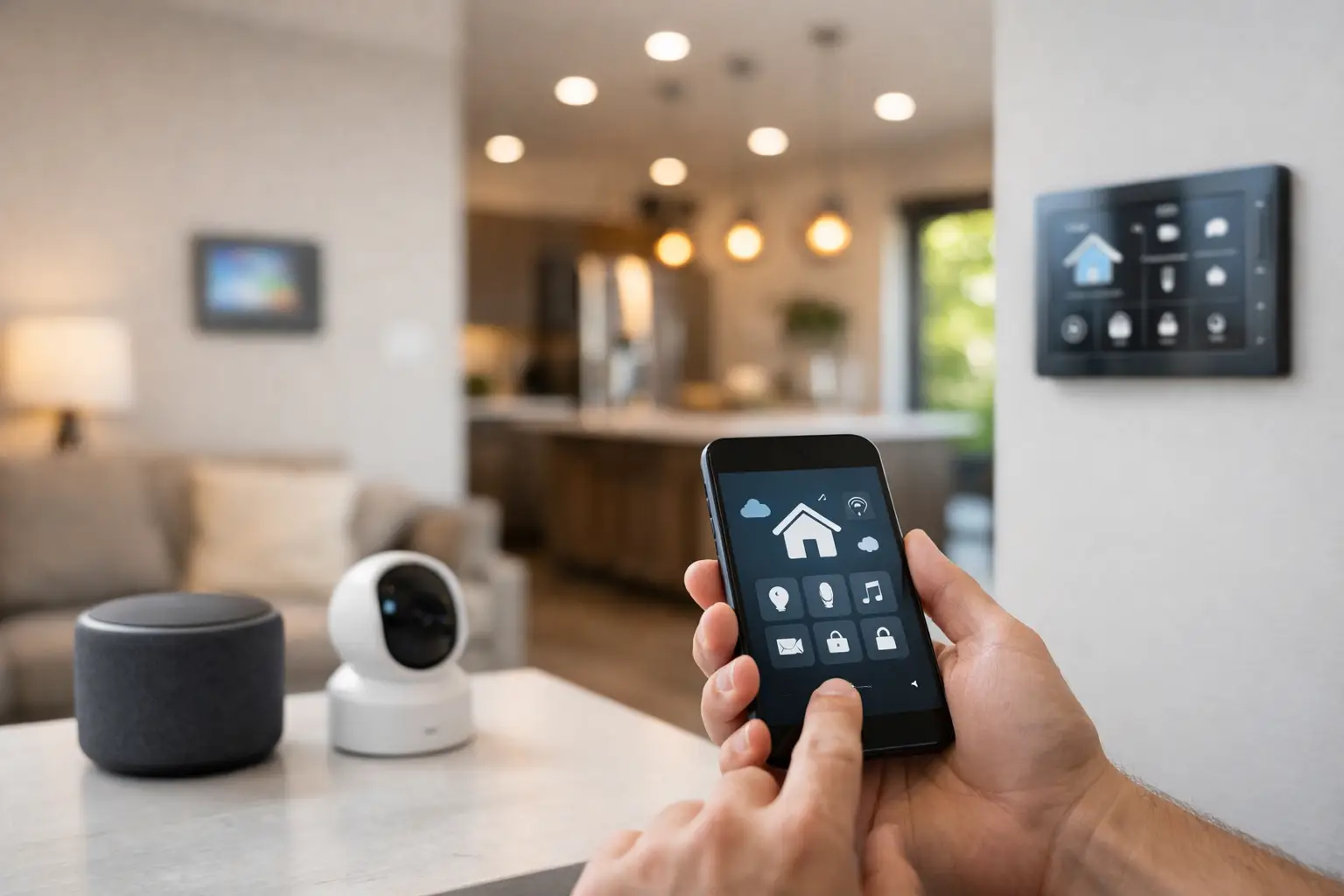
A great whole home automation system is not a wall full of touchscreens or a collection of devices that each need their own app. It is the house responding intelligently to the people inside it: lights adjust as the day changes, shades protect a sunny room before it overheats, doors lock when everyone leaves, and the temperature settles before the family gets home. The technology should feel considered, not constantly demanding attention.
For homeowners building, renovating, or trying to bring order to years of disconnected smart devices, the real question is not which gadget to buy next. It is whether the home has a reliable brain that can coordinate everything already in place and make thoughtful decisions over time.
A Whole Home Automation System Should Unite the House
Lighting, climate, security, shades, audio, entertainment, irrigation, garage doors, and energy monitoring are often purchased at different times from different brands. That is normal. The frustration begins when every category becomes a separate destination: one app for cameras, another for thermostats, remotes for entertainment, and voice commands that work only some of the time.
A true whole home automation system brings those systems into one organized experience. Centralized control matters, but coordinated behavior matters more. A “Goodnight” routine should not merely turn off a few lights. It can secure entry points, lower shades, set the thermostat for sleep, silence selected audio zones, and leave a safe path of low-level lighting if someone gets up later.
That kind of coordination is what turns connected products into a connected home. It also makes the system useful to everyone in the household, not just the person who set it up.
Automation Is More Valuable Than Remote Control
Remote control is convenient. Automation is where a premium home starts to feel genuinely intelligent.
Consider a west-facing living room. A connected shade can be raised and lowered from an app, but that still requires someone to notice the glare. A well-designed automation can account for time of day, sun position, indoor temperature, occupancy, and whether the room is being used for a movie. The result is comfort without interruption.
The same principle applies throughout the house. A driveway camera notification may be appropriate when nobody is home but unnecessary when a family member has just arrived. Exterior lights can respond to dusk, motion, and the home’s current mode rather than following a rigid timer. Climate settings can adapt around actual household patterns instead of maintaining an empty house at peak comfort all day.
The best rules are specific enough to help and restrained enough to stay out of the way. Over-automation can become annoying quickly. A light that turns off while someone is quietly reading or a lock that triggers at the wrong moment does not feel smart. It feels unreliable. Good system design includes exceptions, presence awareness, manual overrides, and easy ways to adjust behavior when life changes.
The Foundation Matters More Than the Interface
A beautiful control app is valuable, but it should not be the only reason to choose a platform. The underlying architecture determines whether the home stays dependable, private, and adaptable as products evolve.
Start with local control. When core automations depend entirely on an outside cloud service, an internet outage or vendor issue can affect functions that should keep working. Lighting, climate, access, and safety-related routines deserve a local foundation whenever possible. Remote access is still useful, especially for checking on a second home or letting an installer diagnose an issue, but it should complement the home’s intelligence rather than replace it.
Privacy deserves the same level of attention. Smart homes can collect sensitive signals about occupancy, schedules, room use, and personal preferences. Homeowners should understand what data is stored, where it goes, who can access it, and whether it is required for the automation to function. A privacy-first system gives the owner meaningful control rather than treating household data as the price of convenience.
Finally, choose a platform that is designed for change. Homes outlast product cycles. You may replace a thermostat, change security providers, add electric vehicle charging, renovate a room, or inherit devices that were selected years before you moved in. An open system with broad compatibility protects those choices better than one that requires every future purchase to come from a narrow approved catalog.
Build Around Experiences, Not Devices
The most effective way to plan home automation is to begin with routines and spaces. Ask what should happen during the moments that repeat every day: waking up, leaving, arriving, cooking, hosting, working from home, watching a movie, and going to bed.
A morning experience might raise bedroom shades gradually, warm the bathroom, illuminate the kitchen at a comfortable level, and share a concise view of weather or commute conditions. An arrival experience could disarm selected alerts, adjust climate based on the time of year, open the garage for authorized users, and set lighting based on whether it is day or evening.
These are not gimmicks when they remove small but repeated tasks. They also create a more polished result than a home filled with isolated voice commands. A guest does not need to know the name of each device. They should be able to use a keypad, a familiar switch, or a simple scene control and get the right response.
Physical controls remain essential. Apps are excellent for settings, remote access, and a whole-home overview. Voice is useful when hands are full. But neither should be the only way to operate daily functions. Well-placed keypads, intuitive switches, and reliable wall controls make automation accessible during a dead phone battery, for children and guests, and for anyone who simply prefers a button.
Plan for Reliability Before Adding Features
Automation only earns trust when it works consistently. That requires more than compatible products. It requires sound network design, appropriate device placement, power planning, and a clear approach to support.
Wireless devices can work extremely well, but large homes may need stronger network coverage and carefully planned mesh networks. Some systems are better served by wired connections, particularly for high-bandwidth cameras, fixed touch panels, and equipment racks. A professional should assess the construction of the home, the distance between devices, likely sources of interference, and whether critical controls have appropriate fallback behavior.
It is also worth deciding who will maintain the system. Software updates can improve security and compatibility, but unmanaged updates can create surprises. Homeowners should expect a managed approach that keeps the platform current, verifies key functions, and provides help without turning every adjustment into an expensive service call.
For installers, this is equally important. A system needs documentation, repeatable deployment methods, remote diagnostics, and a clean handoff process. A home that is easy to service is a better experience for the client and a more sustainable business for the integrator.
Where AI Belongs in the Home
AI can make automation easier to create and refine, but it should not be treated as a mysterious substitute for homeowner control. Its best role is practical: recognizing patterns, suggesting useful routines, identifying devices that behave unusually, and helping translate plain-language requests into clear automations.
For example, if the household consistently lowers the same shades at sunset and turns on a certain lighting scene afterward, an AI assistant can propose that routine. The homeowner should be able to review it, modify it, and decide whether to activate it. That model combines convenience with accountability.
The right AI experience is transparent. It explains what an automation will do, respects privacy boundaries, and makes it simple to reverse a change. Technology should adapt to the home, not ask the home to surrender control to a black box.
Choose Flexibility Without Sacrificing Support
There is a false choice in smart home technology: accept a closed luxury ecosystem for professional reliability, or assemble an open system alone and become the household IT department. Homeowners should not have to choose between freedom and support.
A professionally managed, open platform can preserve the devices and brands that make sense for the home while providing one point of control, ongoing updates, remote support, and expert installation. Selora Homes is built around that model, bringing open, flexible smart home infrastructure into a polished system that can unify thousands of compatible devices.
Before committing, evaluate the platform against four practical questions:
- Can it integrate the devices you own now and the categories you expect to add later?
- Do essential controls and automations continue working locally when the internet is unavailable?
- Can you change installers, service providers, or hardware brands without replacing the entire system?
- Is there a clear plan for updates, support, privacy, and long-term ownership?
A home should become more personal over time, not more restricted. Choose a system that gives your household calm, capable automation today and leaves room for the way you will live tomorrow.