
What Is Smart Home Automation?
What is smart home automation? Learn how connected devices, rules, and AI work together to simplify lighting, climate, security, and more.
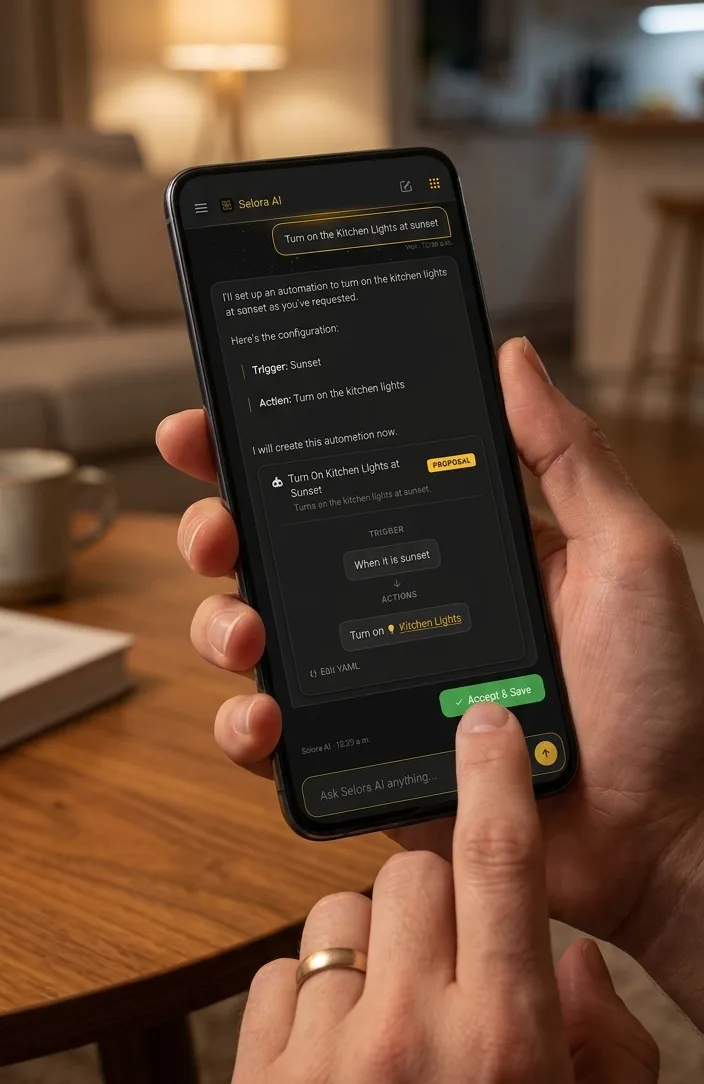
You tap one button at bedtime and the house responds in seconds: lights dim, doors lock, shades lower, the thermostat adjusts, and the security system arms. That is the simplest way to understand what is smart home automation. It is not just a collection of gadgets. It is a coordinated system that lets your home react automatically based on your schedule, preferences, presence, and conditions inside or outside the house.
For many homeowners, the real appeal is not novelty. It is control without friction. Instead of opening five different apps to manage lighting, music, cameras, climate, and shades, automation brings those systems together so the home behaves more like a well-run environment and less like a pile of disconnected tech.
What is smart home automation, really?
Smart home automation is the use of connected devices, software, and logic to control home systems automatically or from a central interface. Those systems can include lighting, thermostats, locks, alarm panels, garage doors, shades, speakers, TVs, sensors, irrigation, and energy devices.
The key word is automation. A smart device on its own is not the full picture. A Wi-Fi light bulb you turn on from your phone is convenient, but it is still mostly manual control. Automation starts when devices respond to triggers and rules without you needing to think about them every time.
That trigger might be time-based, like outdoor lights turning on at sunset. It might be event-based, like a hallway light turning on when motion is detected after midnight. It might be conditional, like lowering shades only if the room is above a certain temperature and the sun is hitting that side of the house. In more advanced setups, AI can learn patterns and suggest routines that match how the household actually lives.
The core parts of a smart home automation system
Most automation systems rely on the same building blocks, even if the user experience varies widely.
First, there are the devices themselves. These are the physical products that do the work: switches, dimmers, smart locks, sensors, thermostats, speakers, cameras, and motorized shades. Some connect over Wi-Fi, while others use standards like Z-Wave, Zigbee, Matter, Thread, or wired protocols used in larger homes.
Second, there is a control layer. This is often an app, wall interface, voice assistant, or keypad that gives you direct access to the system. Good control feels simple. Great control disappears into the background because the home already knows what to do.
Third, there is a hub or central platform. This is where many smart homes either become elegant or stay fragmented. Without a unifying platform, homeowners often end up juggling multiple apps that do not communicate well. A central hub brings devices into one system, manages automations, and creates a single source of truth for the home.
Finally, there is the automation logic. This is the intelligence behind the scenes. It defines what happens, when it happens, and under what conditions. That logic can be basic, like scheduled lighting, or highly customized, like occupancy-aware climate control tied to windows, shades, and weather conditions.
Why homeowners are moving beyond simple smart devices
There is a big difference between owning smart products and owning a smart home.
Many households start with a few popular devices: a video doorbell, a smart thermostat, a couple of speakers, maybe some lighting. At first, that feels like progress. Then the friction shows up. One app controls music. Another handles cameras. A third runs lights. Voice commands work sometimes, but not consistently. Family members never quite know which app does what.
This is where automation becomes valuable. It replaces manual micromanagement with coordinated behavior. You are no longer controlling isolated devices. You are designing how the home should function.
That matters even more in larger homes, custom builds, and renovations where expectations are higher. If a home includes lighting scenes, distributed audio, security, climate zones, motorized shades, and energy management, piecing those together with consumer-grade app stacks usually creates more hassle than convenience.
What smart home automation can actually do
The practical uses are broader than most people expect. Lighting is often the entry point because the benefit is immediate. Scenes can shift a room from daytime brightness to evening comfort, or trigger a whole-home pathway at night with one command or no command at all.
Climate control is another strong use case. Automation can adjust temperature by occupancy, time of day, room usage, weather, or whether windows and doors are open. That improves comfort and can reduce unnecessary energy use.
Security and access control become more useful when integrated with the rest of the house. A front door unlock can disarm the system, turn on entry lights, and set a preferred indoor temperature. When everyone leaves, the home can lock up, arm itself, turn off selected devices, and shift into an away mode.
Entertainment is often where people notice the difference between a few connected products and a professionally managed system. Music, TVs, speakers, and media rooms work better when they are coordinated from one place instead of spread across overlapping apps and remotes.
Shades, irrigation, pool controls, garage doors, and energy systems also fit naturally into automation. The point is not to automate everything just because you can. The point is to automate what removes friction, adds comfort, and improves daily reliability.
The trade-off: convenience vs complexity
Smart home automation sounds straightforward until compatibility enters the conversation.
The market is full of brands that work well inside their own walls but become difficult when mixed with others. Some systems are polished but closed. Others are flexible but demand a level of technical effort most homeowners do not want. That creates a common problem: the more devices people add over time, the less unified the experience becomes.
There is also the question of ownership. Some proprietary systems require dealer involvement for even minor changes. That can be fine for some clients, especially those who want a fully managed experience and never plan to switch. But it can become frustrating when every update, small adjustment, or expansion turns into a service call.
Open and professionally managed platforms offer a different path. They aim to preserve the premium experience while avoiding lock-in. That matters if you want broad device compatibility, lower long-term cost, and the freedom to evolve the system as technology changes.
What to look for in a modern automation platform
If you are evaluating smart home automation, the best question is not which gadget is trending. It is whether the platform can support the home you want five years from now.
Compatibility should come first. A strong platform needs to work across lighting, security, climate, audio, shades, sensors, and legacy devices you may already own. If it only works well with a narrow brand set, future upgrades can get expensive fast.
Centralized control matters just as much. One app and one core system is dramatically better than a patchwork of logins and interfaces. The user experience should be clean enough for every member of the household, not just the most technical person.
Privacy is another serious consideration. Smart homes generate a lot of behavioral data. Homeowners should understand where that data lives, who can access it, and how much of the system depends on cloud-only services.
Support and lifecycle management often get overlooked until something breaks. Updates, remote troubleshooting, and long-term system health matter, especially in premium homes where reliability is the expectation, not a bonus.
This is why professionally managed systems are gaining traction. Platforms such as Selora Homes are built around a simple idea: homeowners should get the flexibility of an open ecosystem without the instability and setup burden that often come with it.
Is smart home automation worth it?
Usually, yes, if it is designed around real living patterns rather than novelty features.
The value is highest when the system saves time, reduces friction, improves comfort, and stays manageable over time. For a small apartment, that might mean a few simple routines. For a custom home, it might mean unifying dozens of devices and systems under one reliable control layer.
The wrong setup can absolutely be frustrating. Too many apps, weak integrations, poor Wi-Fi planning, and closed systems with expensive change orders can turn a smart home into a maintenance project. The right setup feels quiet, responsive, and predictable.
That is the standard worth aiming for. A smart home should not demand more attention from you. It should give some of that attention back.
If you are asking what is smart home automation, the best answer is this: it is the shift from controlling devices one by one to creating a home that works together on purpose. Start with the routines you repeat every day, choose a platform that stays flexible, and build a system that still makes sense long after the latest gadget cycle passes.
If you want to see what that looks like for your specific home and devices, book a consultation .