
Why Local Smart Home Control Wins
Local smart home control keeps automation logic inside the home, so it responds faster, protects privacy, and stays reliable even when the cloud fails.
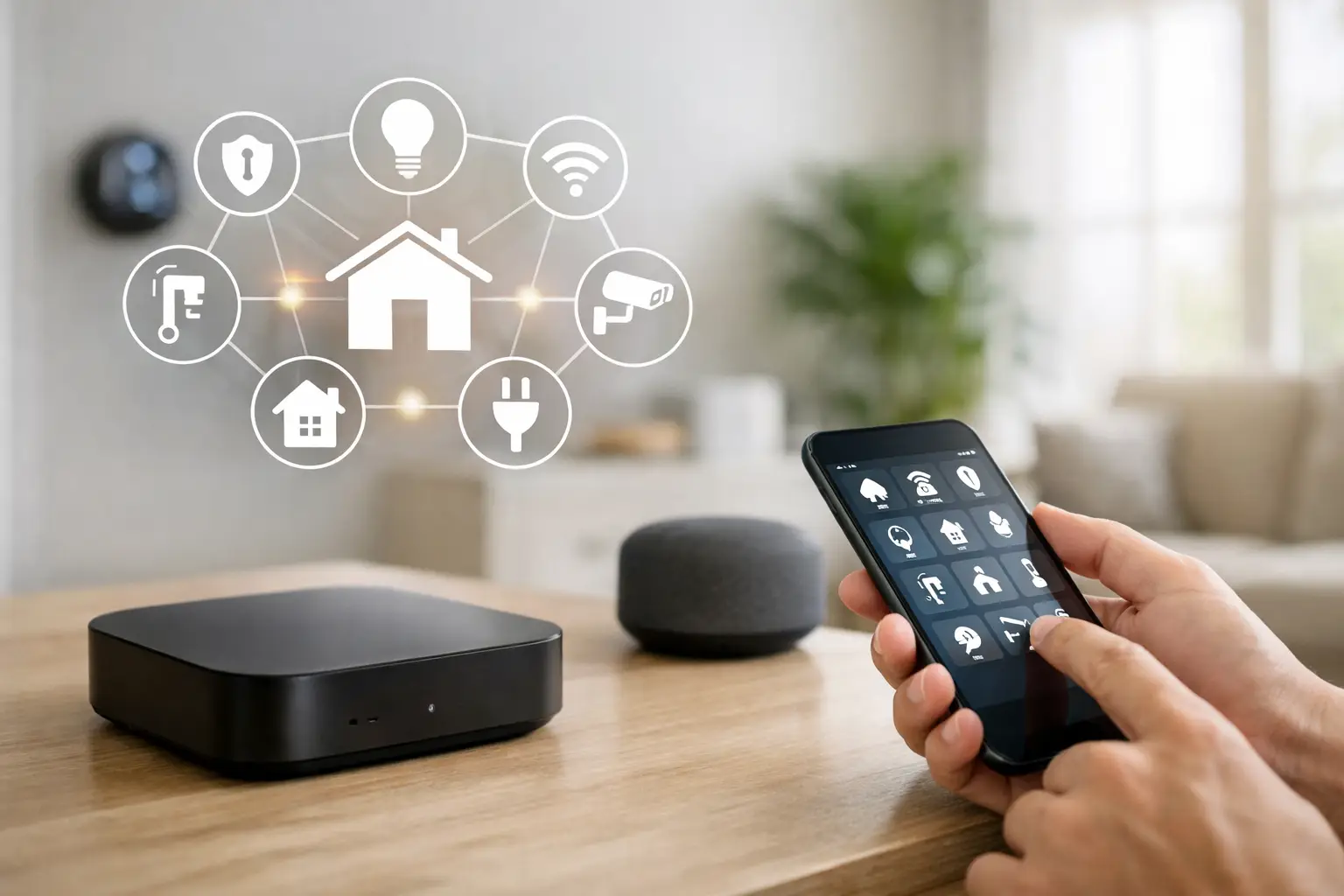
When the internet hiccups, your lights should still turn on, your shades should still respond, and your climate schedule should not suddenly forget what morning means. That is the real test of local smart home control. Not the demo. Not the app screenshots. The moment that matters is when your home needs to keep working without waiting on a cloud server somewhere else.
For homeowners building or upgrading a premium smart home, this is where the conversation gets more serious. A beautiful keypad, a polished app, and voice control are easy to market. Reliability is harder to see until something breaks. Local smart home control changes that equation by keeping core automation logic inside the home, where it can respond faster, protect privacy better, and stay useful even when outside services fail.
What local smart home control actually means
At a basic level, local smart home control means your devices, automations, and system logic can communicate within your home network instead of depending on the cloud for every action. If a motion sensor triggers a hallway light at night, that command can happen directly and immediately through the local controller or hub. It does not need to travel out to the internet and back.
That sounds like a technical detail, but in daily use it changes everything. Local control reduces lag. It keeps critical routines running during internet outages. It also limits how much of your household behavior is continuously routed through third-party platforms.
This does not mean the cloud has no place. Remote access, managed updates, notifications, and backup services can all add value. The stronger model is not local versus cloud as an absolute. It is local-first architecture, where the home keeps functioning on its own and cloud services enhance the experience rather than define it.
Why local smart home control matters in real homes
Most smart home frustration comes from one of three places. The first is delay. You press a button, speak a command, or trigger a scene, and the response feels inconsistent. The second is fragmentation. One app handles lights, another handles security, another handles audio, and none of them behave like a single system. The third is dependency. If one manufacturer changes an API, discontinues a product, or has a server outage, pieces of your home stop cooperating.
Local smart home control addresses all three.
Because automations run close to the devices, performance is faster and more predictable. Because a capable local hub can unify products across brands, the system behaves more like one home and less like a stack of gadget experiments. And because core logic does not rely on constant cloud approval, the home is more resilient over time.
For affluent homeowners and custom home clients, that resilience matters. A premium home should not feel fragile. If the lighting scene for dinner takes three attempts to activate, or if a gate camera becomes unreliable because of a vendor outage, the technology starts to feel cheaper than it was.
Speed, privacy, and control are linked
There is a reason local systems tend to feel more refined. Speed, privacy, and control are not separate benefits. They reinforce each other.
A locally executed lighting automation is faster because the command stays inside the home. It is more private because less event data leaves the property. It is more controllable because the homeowner or installer is not waiting on a distant service layer to interpret every action.
That matters even more as homes add intelligence. AI-generated automations can be genuinely useful, but they should sit on top of a strong foundation. If the underlying system is cloud-dependent and fragmented, adding more complexity just creates smarter chaos. If the foundation is local-first, AI can help refine schedules, suggest routines, and improve comfort without turning the home into a black box.
The trade-off most buyers miss
Cloud-first smart homes are often easier to start and harder to mature. Local-first smart homes may take more planning up front, but they age better.
That distinction matters if you are building a home you expect to live in for years. Many consumer platforms are designed around quick setup, not long-term system design. They work fine for a small apartment or a few connected devices. Then the project grows. Lighting expands. Shades are added. Audio zones multiply. Security, climate, and energy monitoring enter the picture. Suddenly the simple setup becomes a patchwork that is difficult to manage and expensive to fix.
This is where open, professionally managed local infrastructure has an advantage. It supports broader device compatibility, cleaner migration paths, and more flexibility for future additions. You are not forced into a single hardware brand just to preserve basic functionality.
There is still a trade-off. Pure DIY local systems can become difficult to maintain if they were assembled without a long-term plan. On the other side, highly proprietary systems may offer polish but tie the homeowner to expensive service calls and limited product choices. The smarter middle ground is professional local control built on an open platform. That gives you structure without lock-in.
Local smart home control and the premium home experience
A premium smart home is not defined by the number of devices. It is defined by how natural the house feels to live in.
That means the kitchen lights know the difference between early morning and late-night cleanup. It means shades respond to the sun without constant manual correction. It means climate control adapts to occupancy patterns. It means a guest room can be comfortable without giving guests access to the entire system. And it means all of this works consistently, not only when every vendor server is healthy.
Local control supports that standard because it brings decision-making closer to the environment being managed. Good automation should feel architectural, almost invisible. The more a system depends on remote services for basic actions, the harder it is to deliver that level of calm and consistency.
What to look for in a local control platform
Not all local platforms are equal. Some are powerful but clearly built for hobbyists. Others are polished but too closed to adapt over time. The best systems for modern homes combine local execution with professional management.
That starts with broad compatibility. A local platform should work across lighting, shades, audio, climate, security, sensors, and major smart home protocols without forcing unnecessary replacement. It should also support migration from mixed ecosystems, because many homeowners already own devices from multiple brands .
It should provide centralized control through a single interface that feels intentional rather than stitched together. It should also offer managed updates, remote support, and field-ready tools for installers. Local control is strongest when it is not only technically capable, but operationally sustainable.
This is where a platform like Selora Homes fits the market well. It brings local-first smart home architecture into a professionally managed, homeowner-friendly system that avoids the usual choice between DIY complexity and proprietary lock-in.
Why installers should care too
Local smart home control is not only a homeowner issue. It changes the economics and reputation of an installation business.
When a system relies too heavily on cloud services and disconnected brand apps, troubleshooting gets messy fast. The installer becomes the person blamed for problems they do not fully control. A local, centralized platform creates cleaner logic, better observability, and more predictable support. It reduces the number of strange edge cases caused by vendor changes outside the jobsite.
For integrators and builders, that translates into fewer service headaches and stronger long-term client relationships. It also opens the door to phased projects. A homeowner can start with lighting and climate, then add shades, audio, access control, or energy management later without rebuilding from scratch.
The smarter question to ask
Instead of asking whether a device is smart, ask whether your home stays smart when the network, vendor, or app does something unexpected.
That question gets to the heart of quality. A smart home should be more than connected products with good branding. It should be an environment that responds quickly, protects privacy, and remains dependable as technology changes around it.
Local smart home control is not a niche preference for power users. It is the foundation for a home that feels premium in the ways that actually matter: speed, stability, flexibility, and confidence. If you are planning a new system or cleaning up a fragmented one, start there. Everything else works better when the house can think for itself.